It is autumn as I type this, and orange is very much a celebrated color in the garden right now. Many trees adopt a shade of orange in their autumn foliage (various Japanese maples, plus ironwoods and sweet gums and oh so many more), and then of course there’s the whole pumpkin thing. Orange is everywhere at this time of year, especially in October.
But other times of the year? Orange is one of the least-liked flower colors by gardeners. I know this because I’ve heard disaparaging remarks made at nurseries, and the internet confirms my suspicion easily.
But why? Why do so many people dislike a color that is literally one sixth of the color wheel? It is adjacent to and looks great with reds and yellows, and is opposite to and looks great with blues and purples. And of course every color goes with green, the very color that defines a garden (at least in summer!).
Some gardeners hate marigolds, and maybe they see orange and just think of common bedding plants? I think some people stress too much about having sections of the garden feature matching colors, and worry too much about whether colors clash. My garden truth? Almost no color combo is clashy when set amidst green foliage, and this is coming from someone who’s sensitive to color and design principles.
I love orange. I also love red, yellow, blue, purple and every other color. To not like a color is to needlessly miss out on something beautiful. Orange flowers work incredibly well with jewel-toned colors (as famously exhibited by Monty Don in his Jewel Garden), and enliven a garden scene with energy that feels somewhat tropical (even when the plants are decidedly temperate).
I’ve grown lots of plants with orange flowers in my garden over the years (Seattle, zone 8b or 9a); not because I’m trying to prove a point, but because that’s just what color some beautiful flowers are! So without further ado, let me introduce you to some lovely plants and combinations featuring orange.
Canna Lily
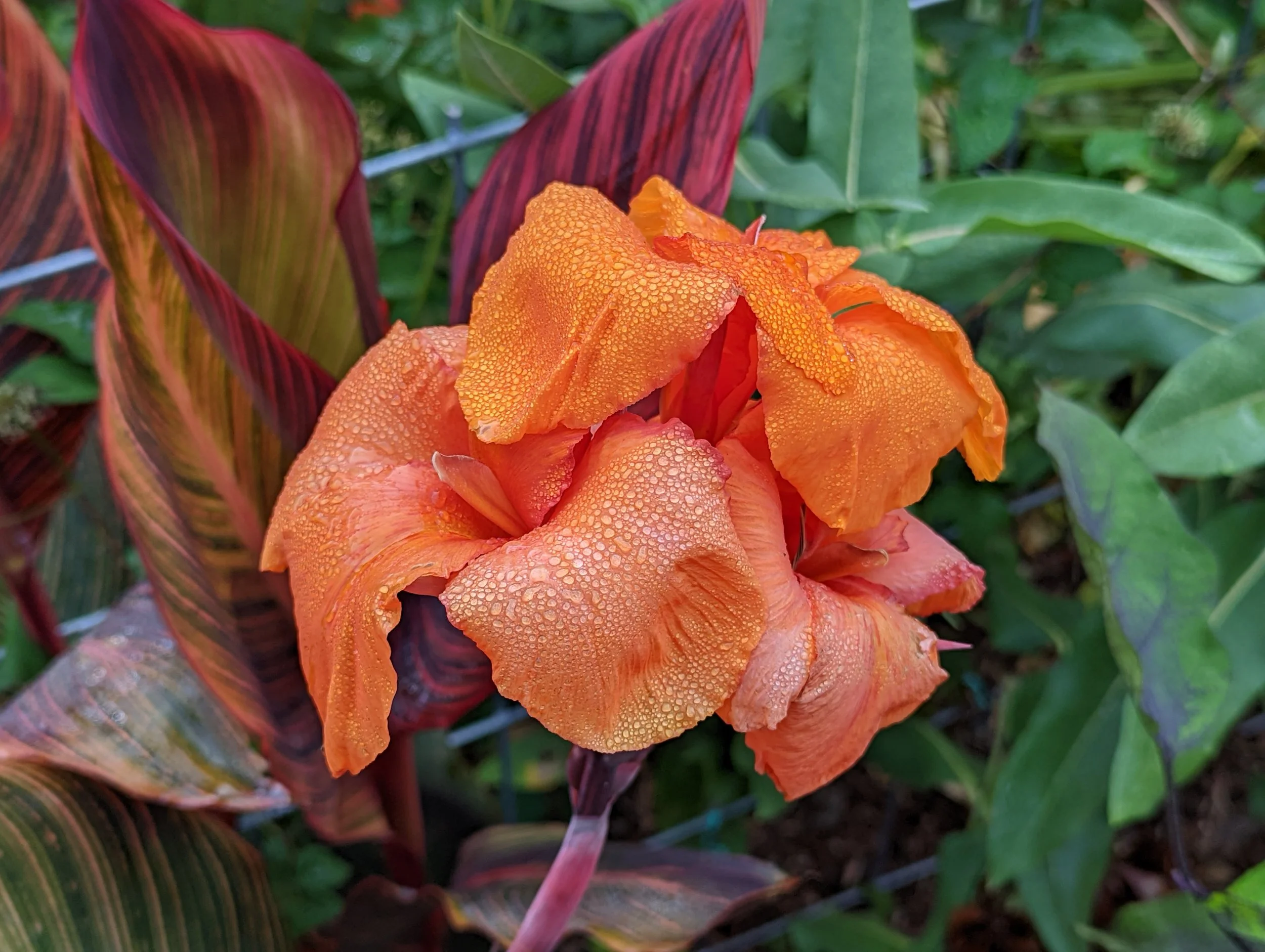
Canna indica ‘Phasion’ (commonly known as ‘Tropicanna’) offers intense oranges to go with incredibly bold foliage. It is happiest in a damp, sunny spot in the garden.
Cannas are native to a broad stretch of the Americas, from sub-tropical eastern US to much of South America. They may be happiest as a bog or pond plant, but also do well in average soil if well watered (especially in the dry summer here in the Northwest). They are hardy to zone 8 (sometimes listed as zone 7) and they generally overwinter just fine in the ground especially if you avoid clay soil (winter rot is a risk). If you use them in a PNW pond or bog, they may overwinter just fine in a mild winter or if the pond is deep enough to not freeze. In smaller pond containers, you may want to lift and clean the rhizomes and store somewhere not freezing for winter (unheated garage works well) or you can transplant the whole plant into decent soil in the garden in fall, pot and all. Longfield Gardens has an in-depth article about usage in ponds.
Tulips
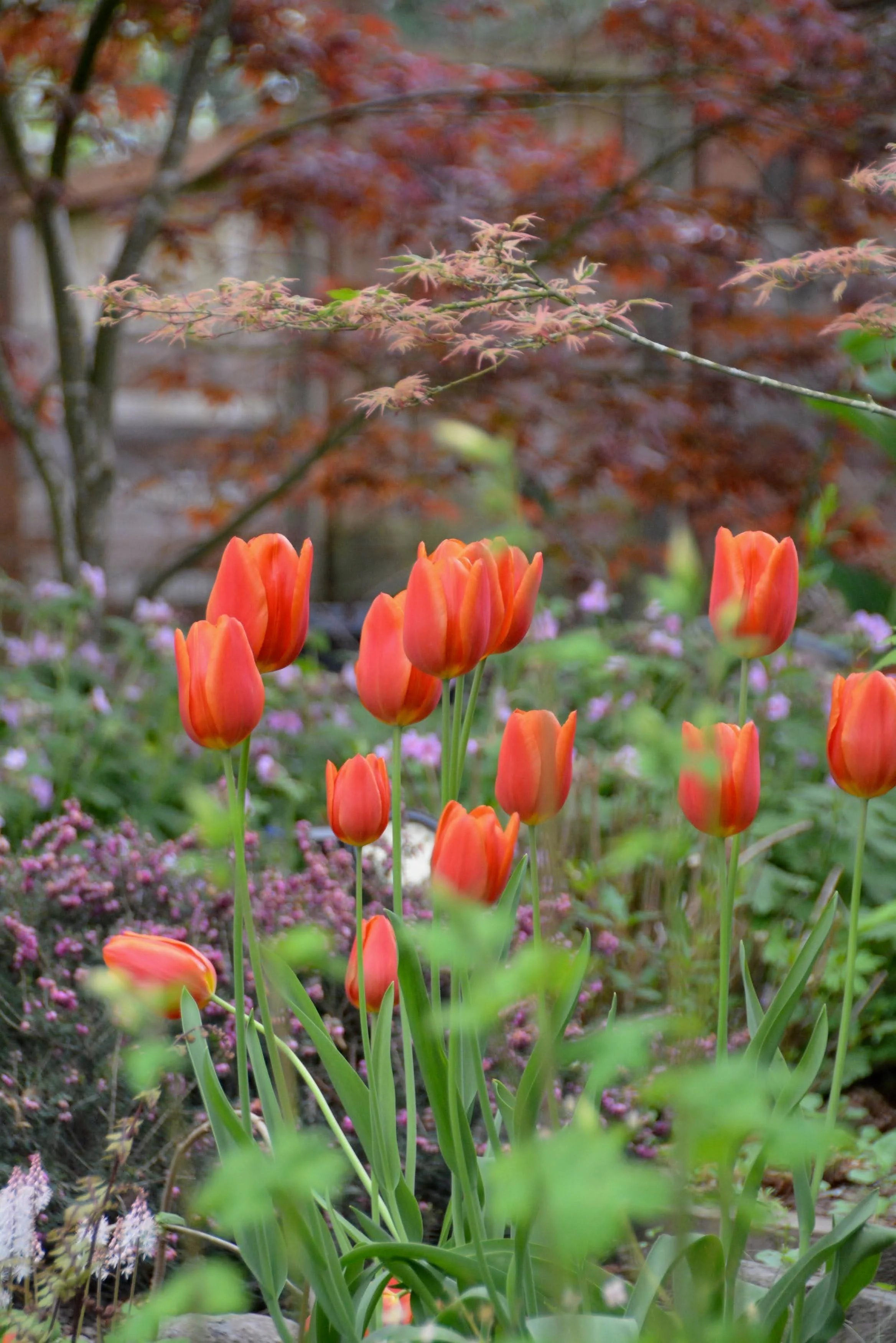
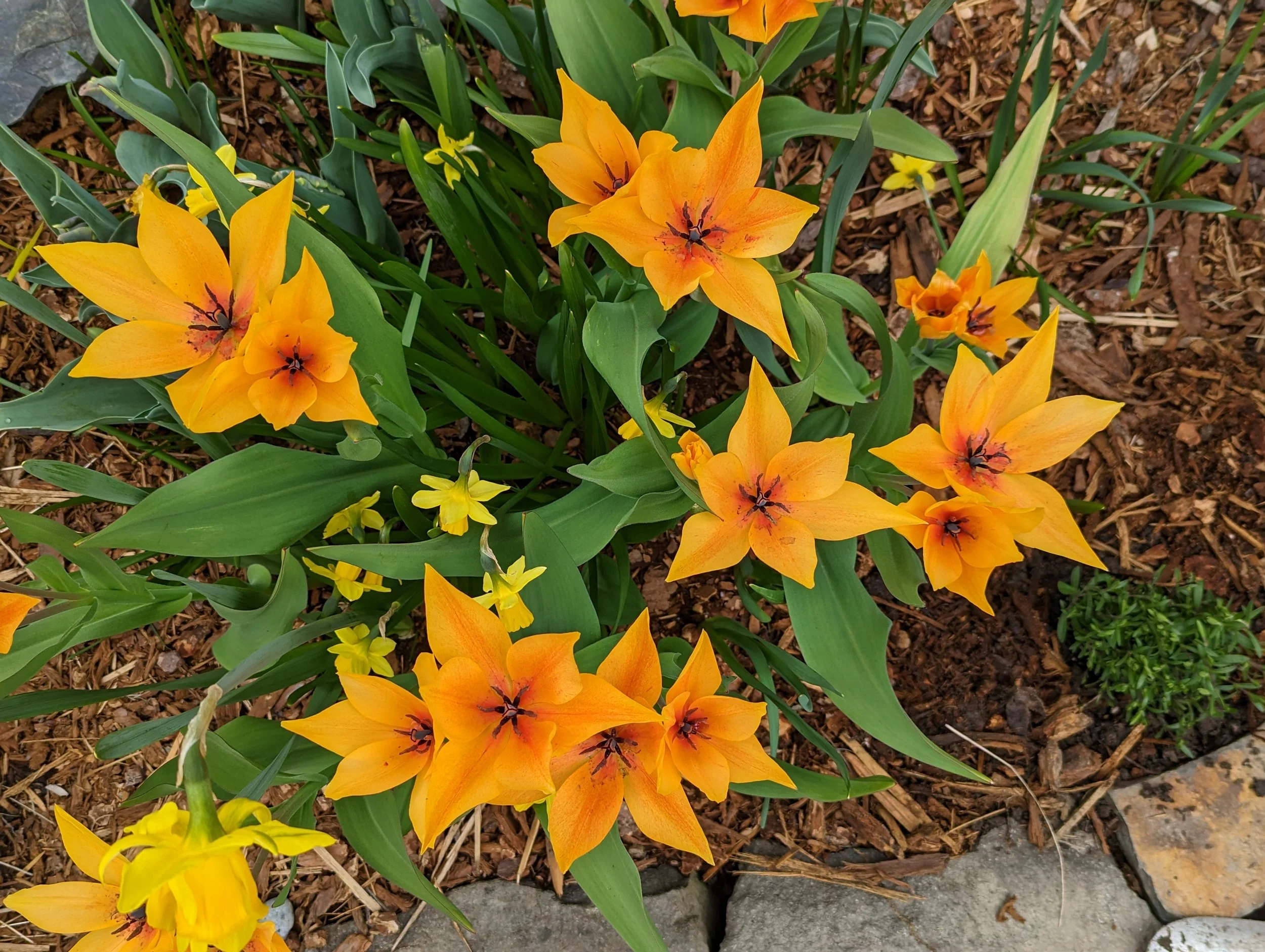
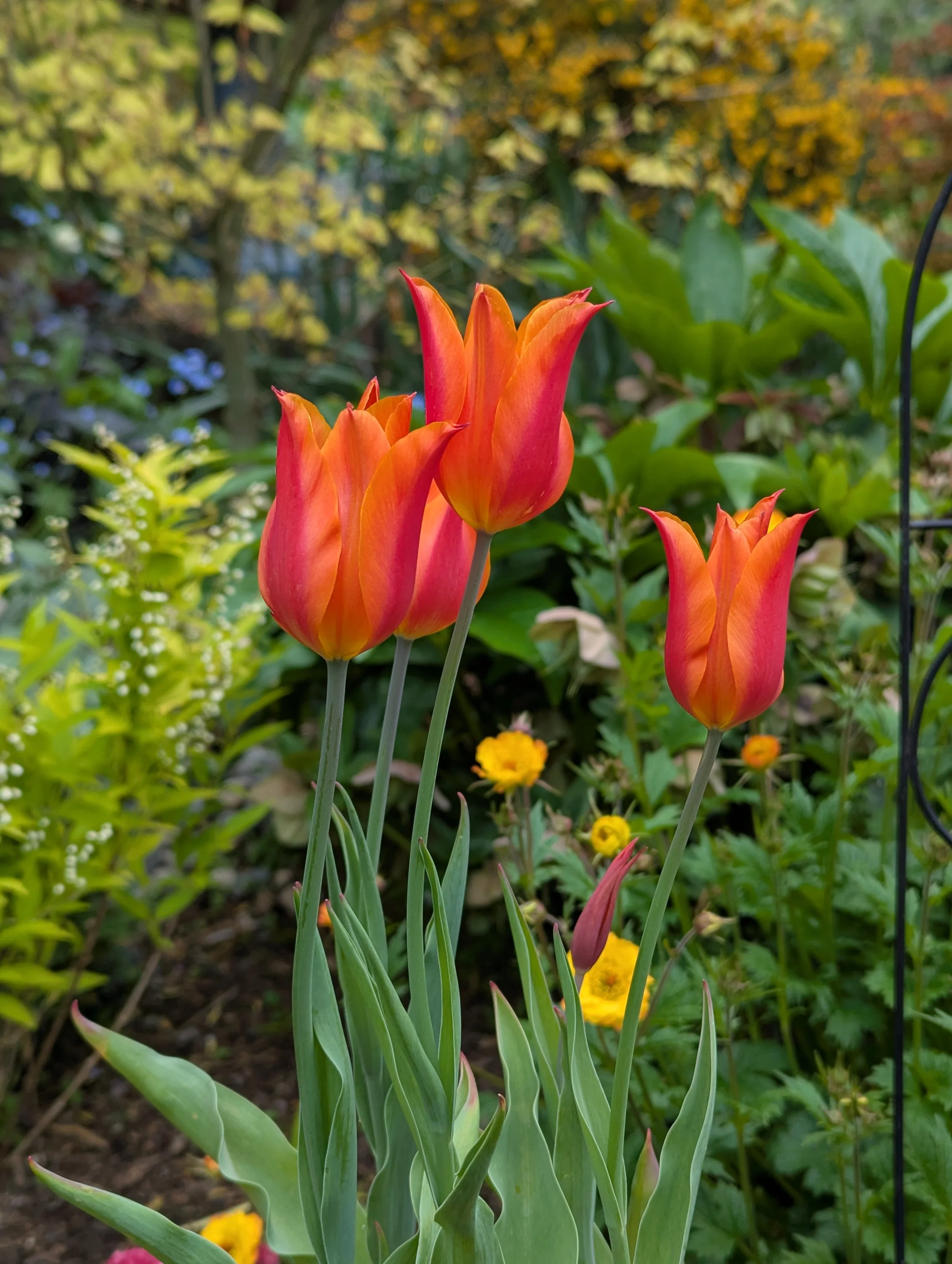
There are obviously zillions of tulips to choose from. Why not plant a few orange ones? I’ve long forgotten the name of the tulips in the first photo above, but it has deep orange kissed with lighter orange. We might describe tulipa praestans ‘Moondance’ (in the middle picture) as yellow-orange, but the deeper color in the throat when the flower is mature makes it feel unmistakably orange. The third photo shows Ballerina, a lily-flowered tulip that mixes blood orange with pumpkin tones. Tulip bulbs are at risk of rotting in the wet winters here in the PNW, so it is very much worth it to add compost and pumice to clay soils (and be generous!) when planting. Some of my tulips have been returning for 10 years or more. Others croak after one year. They are a bit of a gamble, but they’re inexpensive and easy to try every year.
Darwin’s Barberry
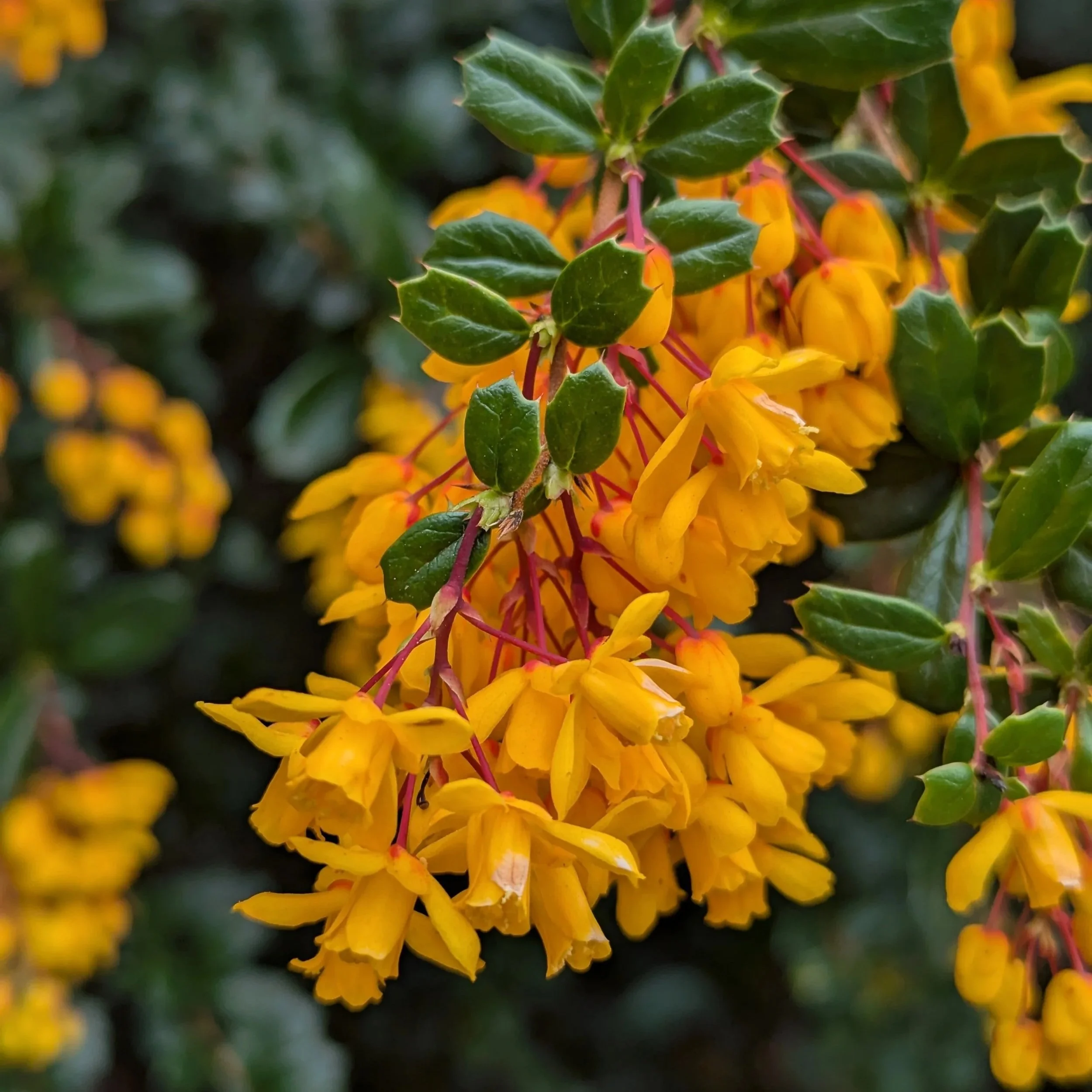
Darwin’s barberry flowers are generally described as yellow-orange or tangerine.
I’m a big fan of evergreens in the garden; I like the advice to make a minimum of 30% of your plant choices be evergreen. This helps your garden have some life, color and structure in the winter. Darwin’s barberry (berberis darwinii or sometimes classified as mahonia darwinii) is a delightful evergreen shrub native to Southern Chile (where Charles Darwin was the first European to collect it). It has barely prickly, lovely glossy leaves; overall the plant is less trouble to work with than a thorny Japanese barberry. The vibrant tangerine flowers erupt in late March for me, a time when it is oh-so-nice to get a big blast of color started in the garden. This plant can reach up to ten feet after ten years or more in the garden, so give it space! It’s drought tolerant and needs little care in my garden.
Crown Imperial Fritillaria
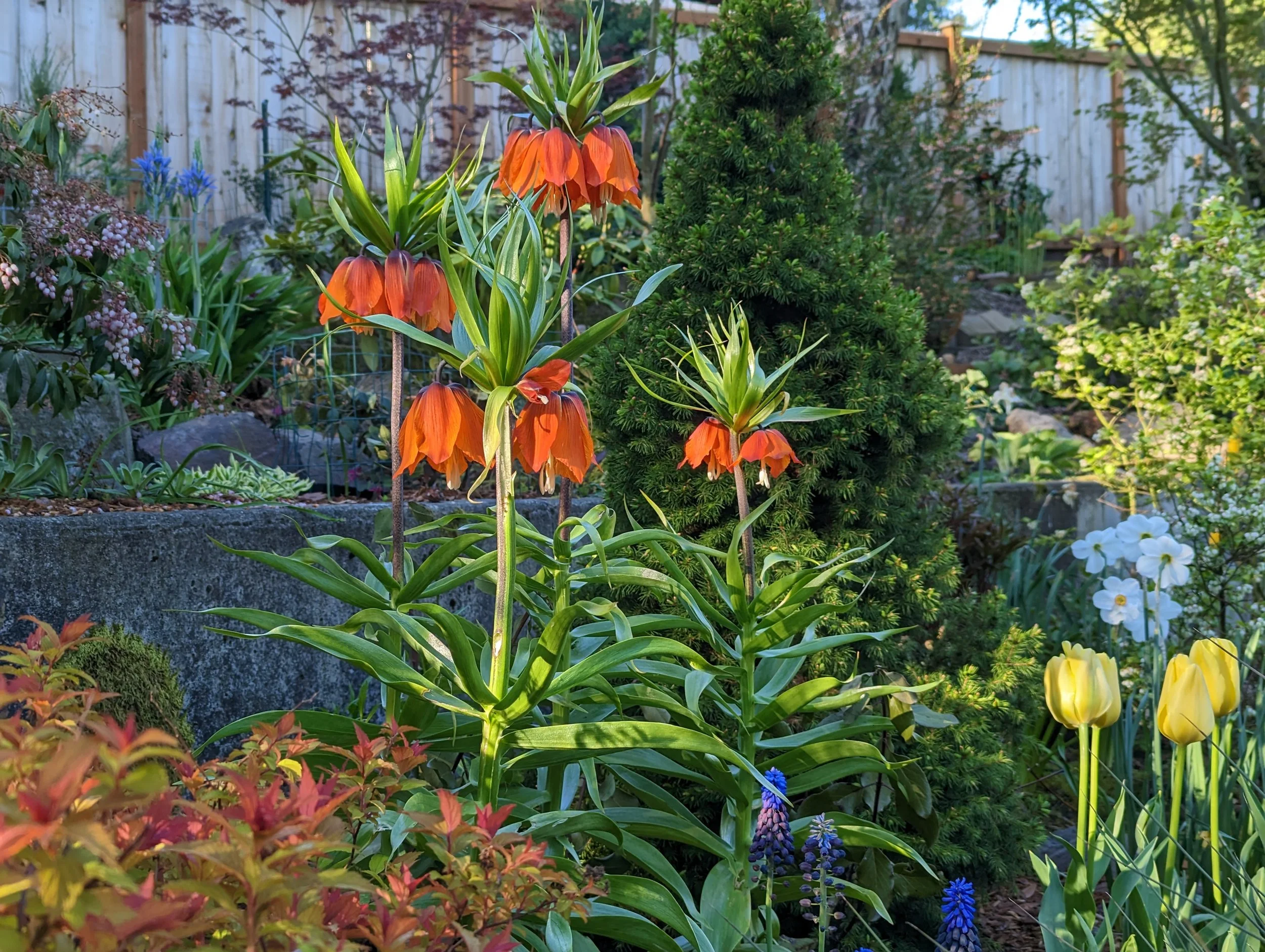
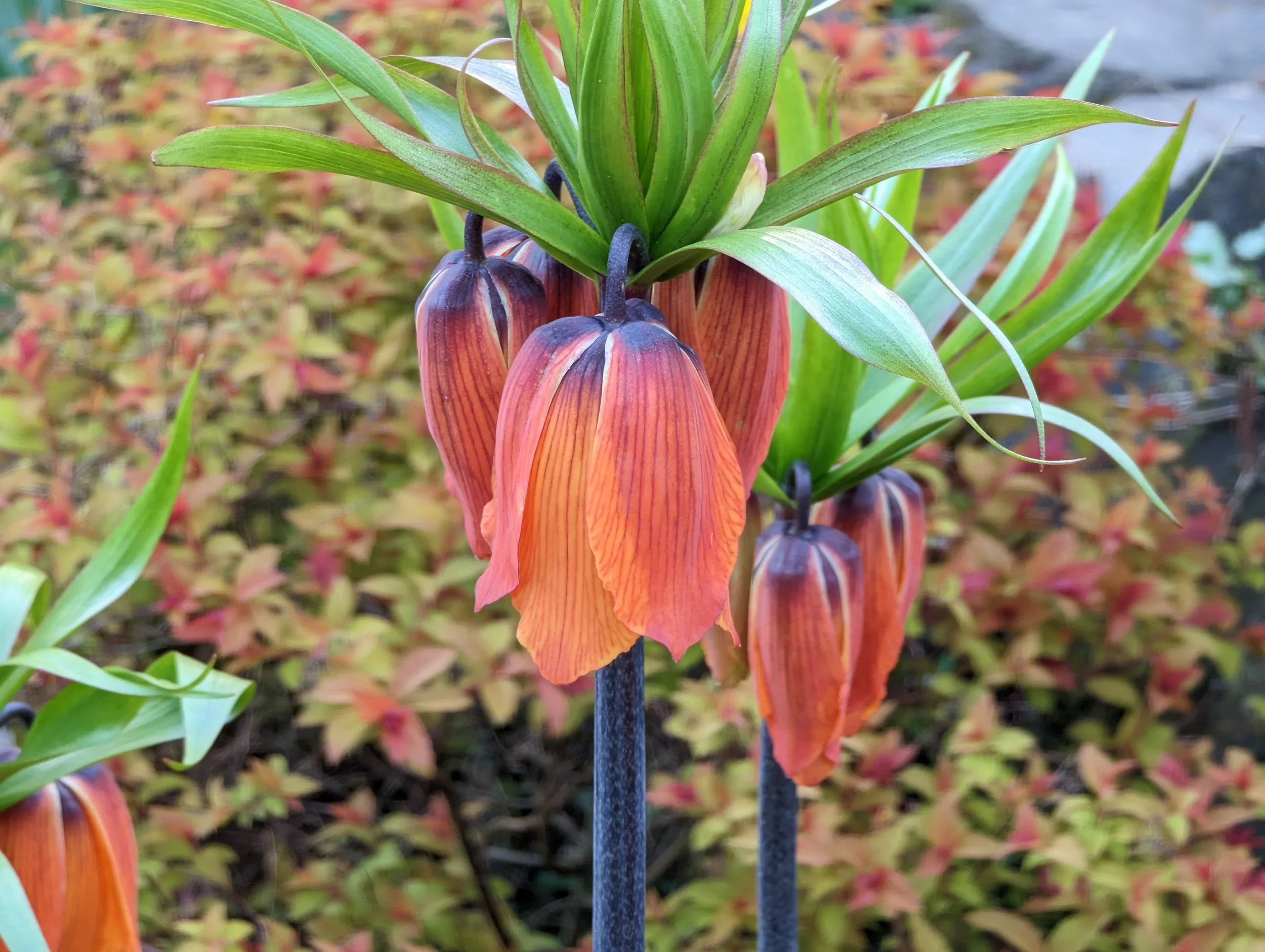
Crown imperials add a touch of statuesque whimsy
Wow! That’s all I have to say every time I see Crown Imperials. It’s hard to imagine what it would be like to see these in the their natural range (roughly Turkey eastward through to the Himalayas). Fortunately, we can plant and enjoy them in our gardens. They are fall planted as bulbs like tulips, and benefit from anything you can do to improve drainage/aeration (I always add compost and pumice). Once the stems start rising out of the ground, it is a daily event to go and see how much taller they are then the day before, such is the speed with which they grow. Eventually they pop out showy lantern flowers topped with a pineapple-ish tuft of foliage on top. There are yellow Crown Imperials also, but for the sake of this post please go for the orange ones (fritillaria rubra).
Geum ‘Totally Tangerine’
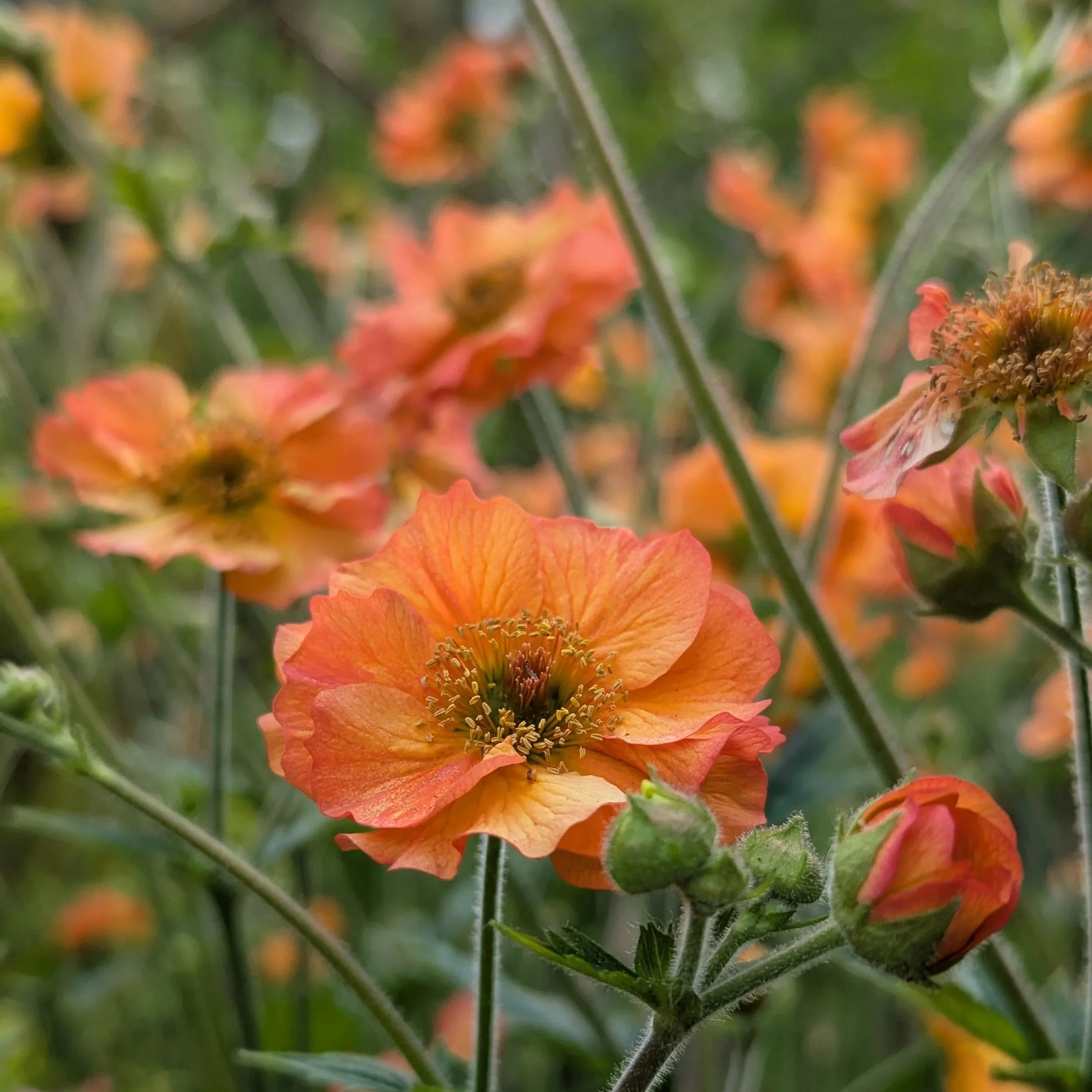
Geum ‘Totally Tangerine’ flowers heavily, and will repeat flower once or even twice if cut back after blooming
I’m a big fan of geums, which can be found on every continent except Antarctica in temperate and subarctic regions. They have exquisitely intricate flowers often no more than an inch and a half wide. They also generally have substantial, attractive and fuzzy basal foliage, and many in the Pacific Northwest will remain evergreen. ‘Totally Tangerine’ is a cultivar introduced a few years ago, and I see it in gardens somewhat regularly. It is a bit taller than many geums — perhaps 24 to 30 inches in flower — and blooms profusely. If you wait til most of the blooms look spent and cut all the flowering stems back below the foliage, you will be rewarded with a second showing of flowers, and may even get a third showing in a nice long growing season.
Succulents
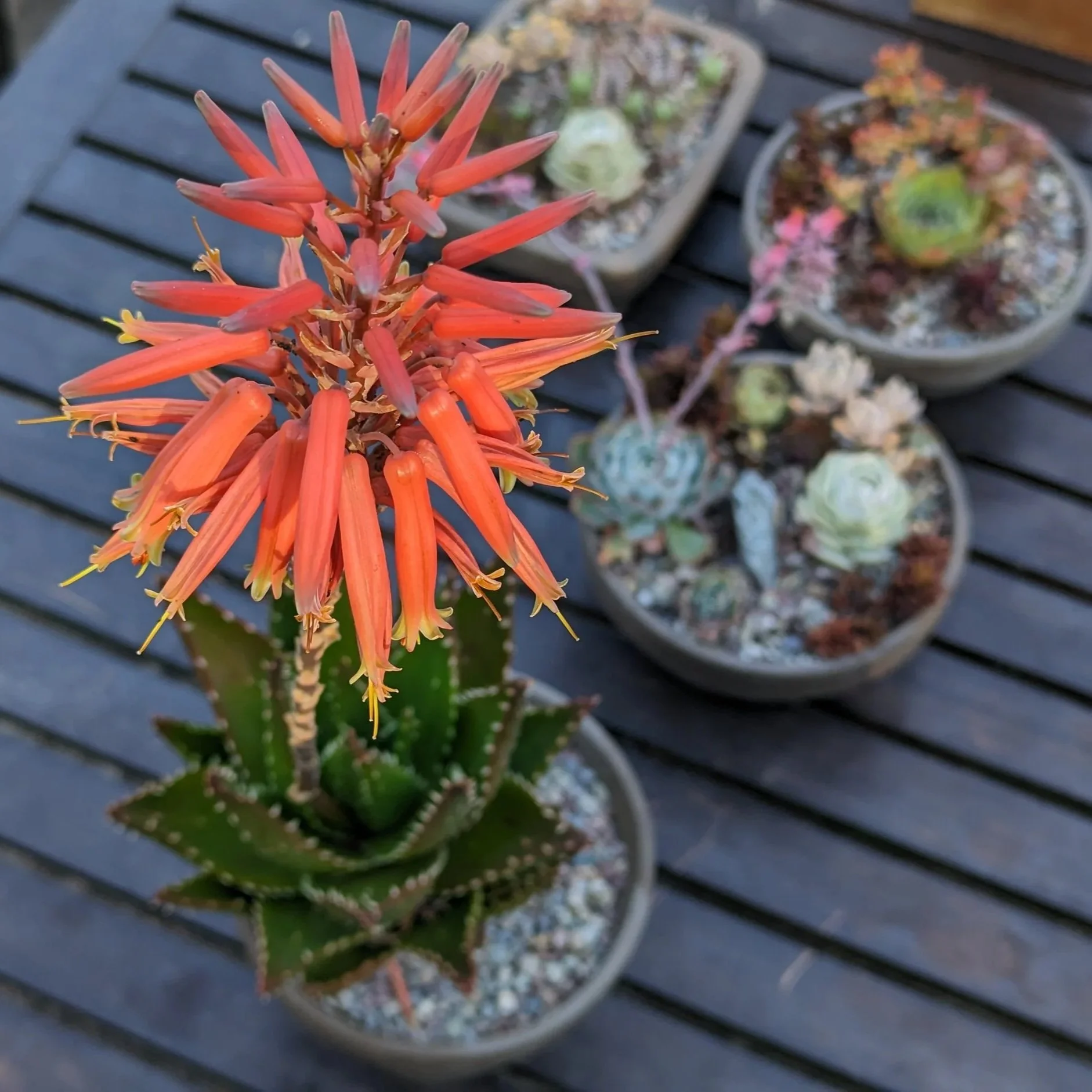
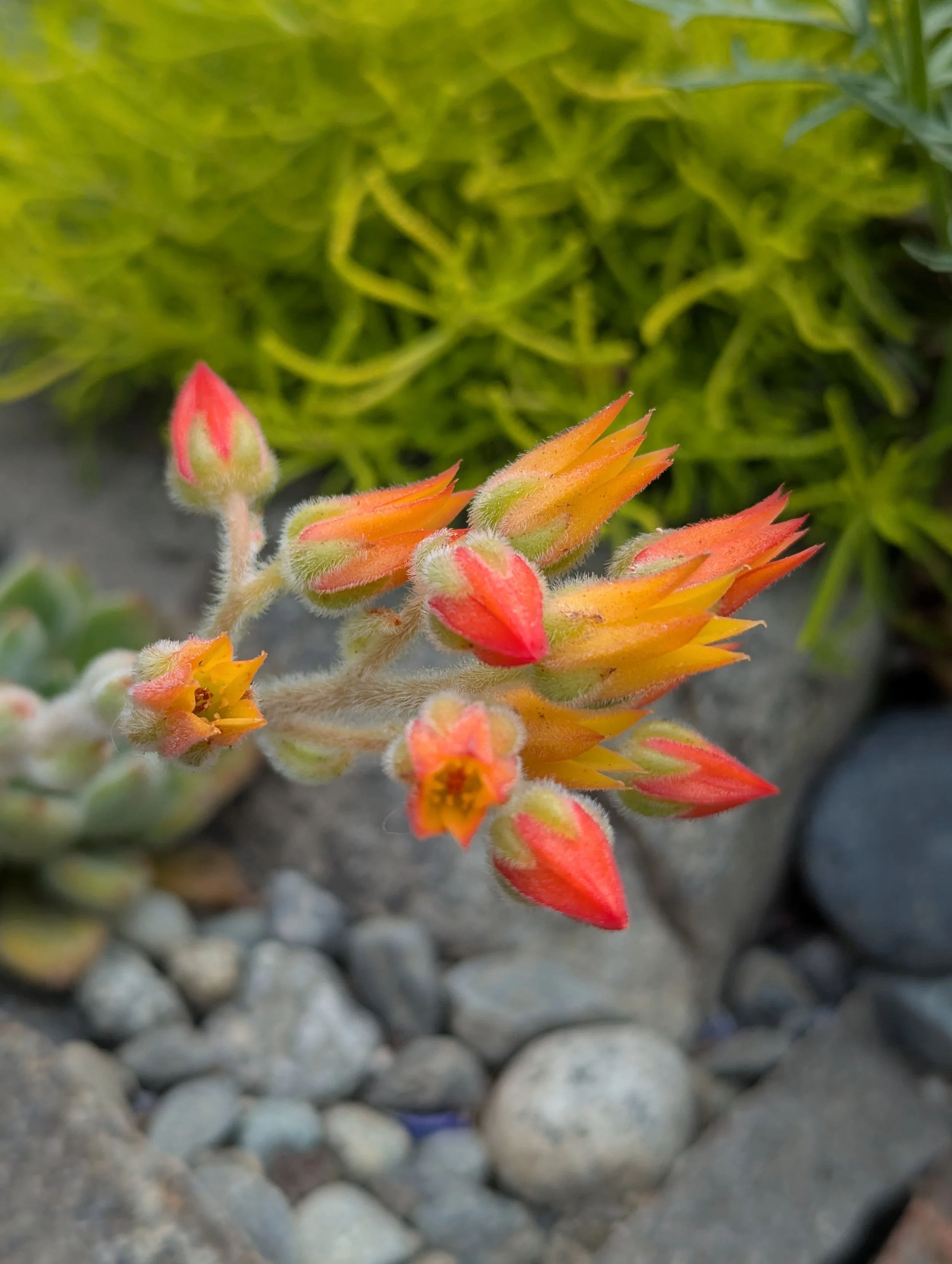
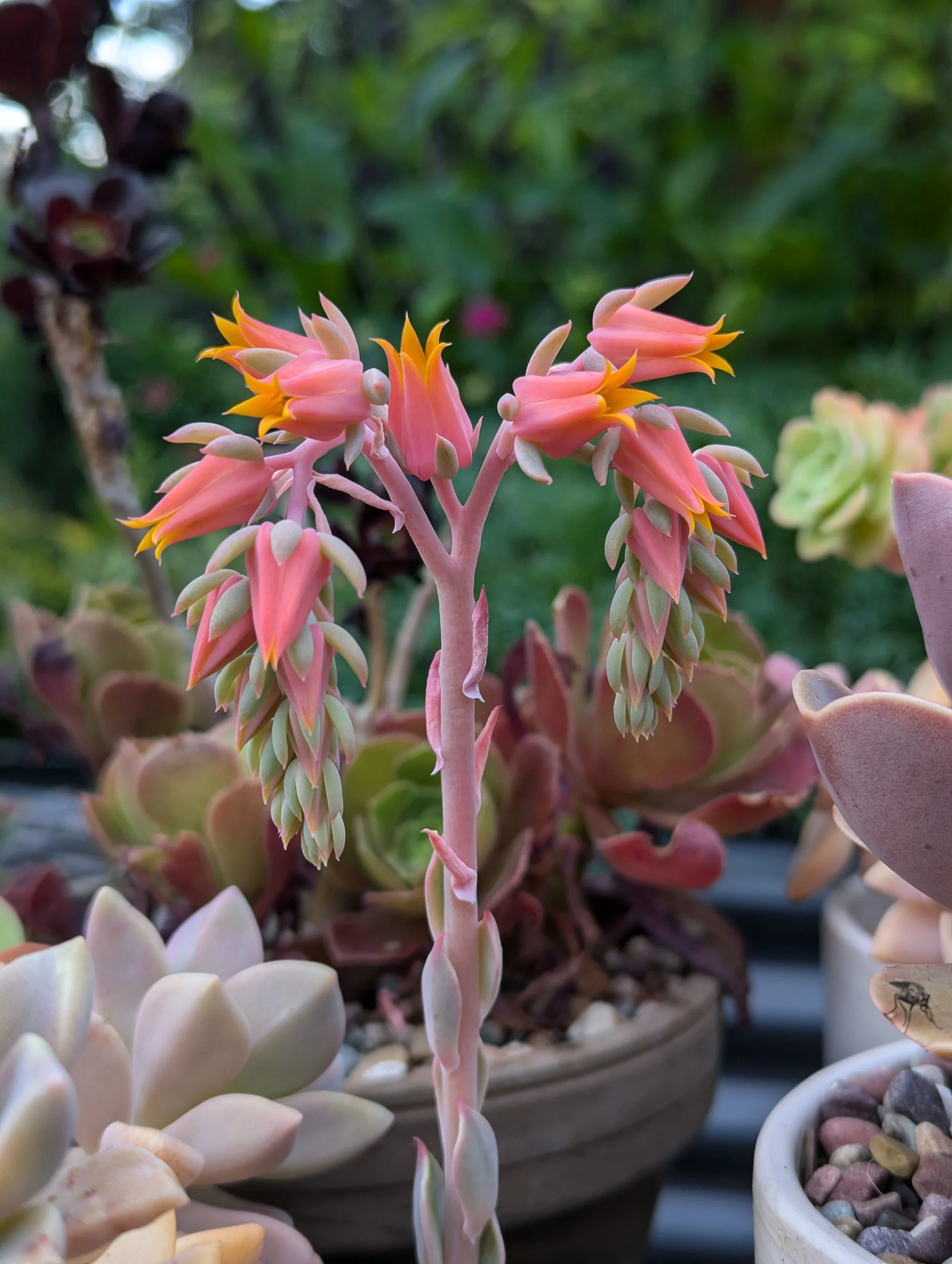
“Succulent” is a broad terms for any plant that stores water in its foliage, and of course not all succulents have orange flowers. However, many do, and they are a sneaky surprise of color, often found on cartoonish structures you’d expect in a Dr. Seuss book. The first photo is aloe nobilis, which sends up a tall stem that erupts with tubular orange flowers reminiscent of kniphofia (red hot poker). The other two photos are species of echeveria, which typically send up a flowering stalk with pendulous lantern- or bell-shaped flowers. All of these require winter protection in the Seattle area; many will do just fine on a south facing windowsill, but all will be happier with augmented light such as an inexpensive LED grow light. My patio would not be the same without these lovelies in the warmer months.
Tithonia (Mexican sunflower)
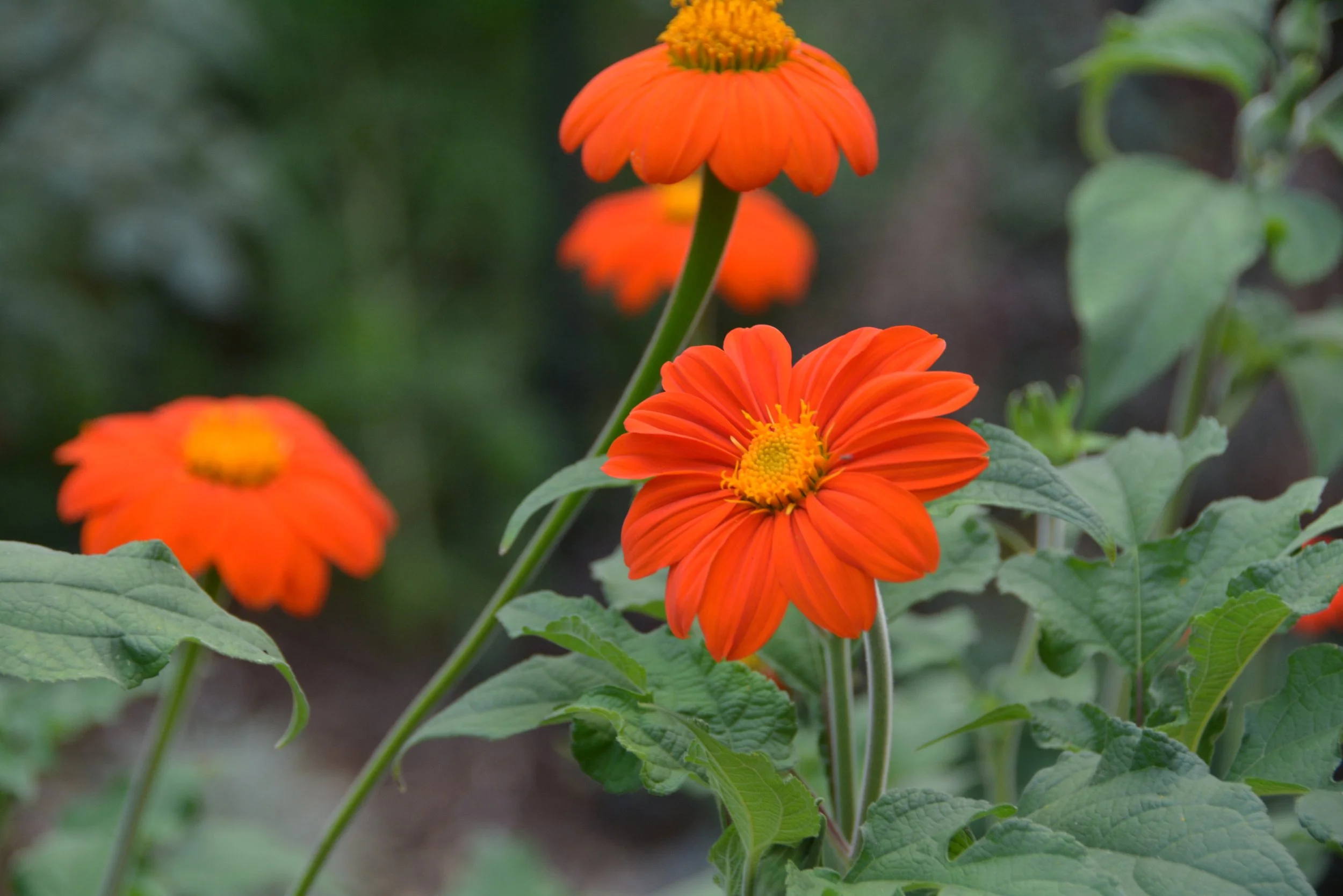
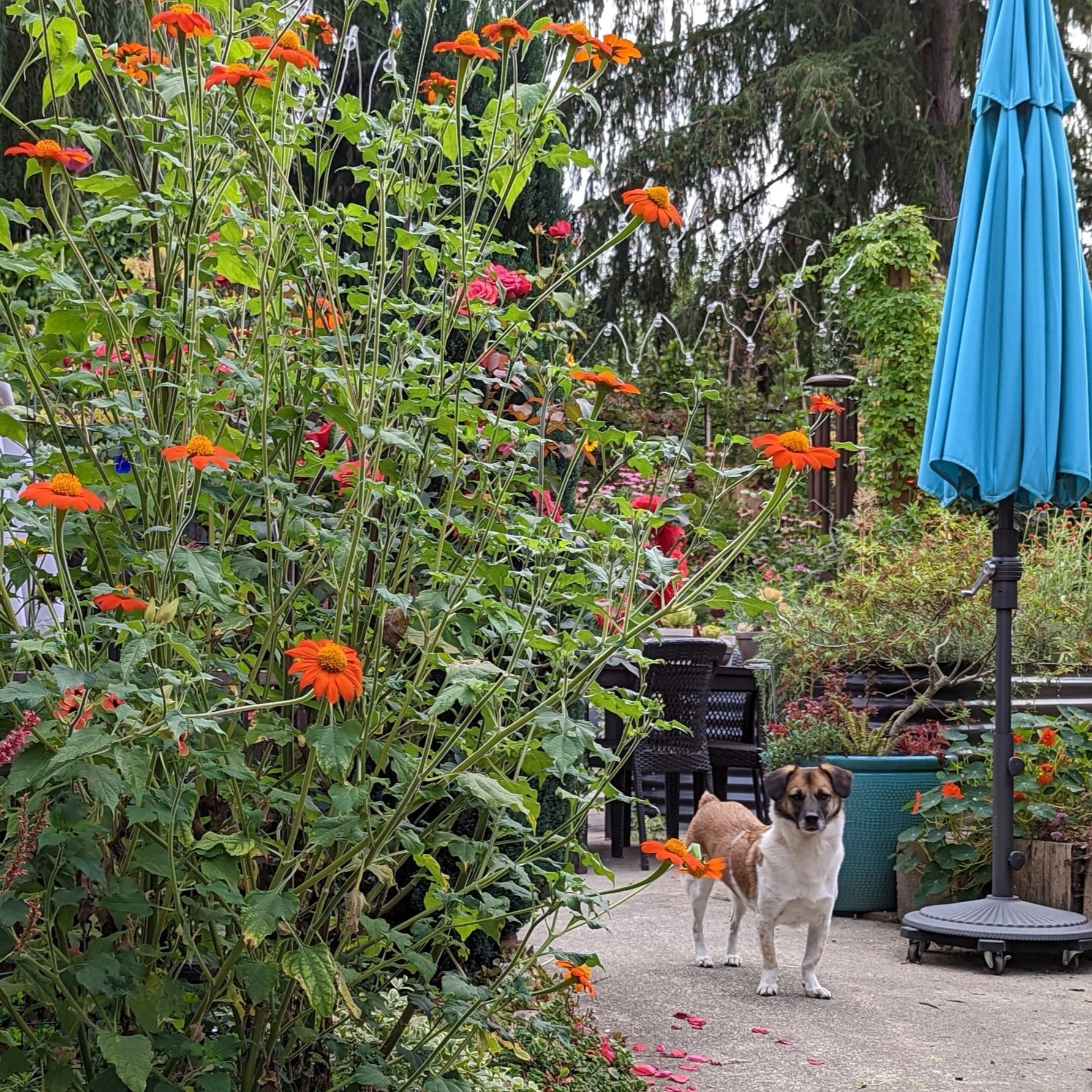
I have gained a lot of inspiration from Monty Don of the BBC’s decades-long running program called Gardener’s World. One flower that Monty always features in his Jewel Garden is tithonia rotundifolia, or Mexican sunflower. It is an annual here in the Pacific Northwest (as in the UK), but it is the most rewarding annual I grow, and I plant a few every year. They can easily top six feet tall, and they branch freely while remaining in an upright shape; by autumn they look very much like a large shrub — all this from one tiny seed, in just a matter of months. They are popular with many species of bees, and Anna’s hummingbirds stop by them frequently for a hit of nectar.
Roses
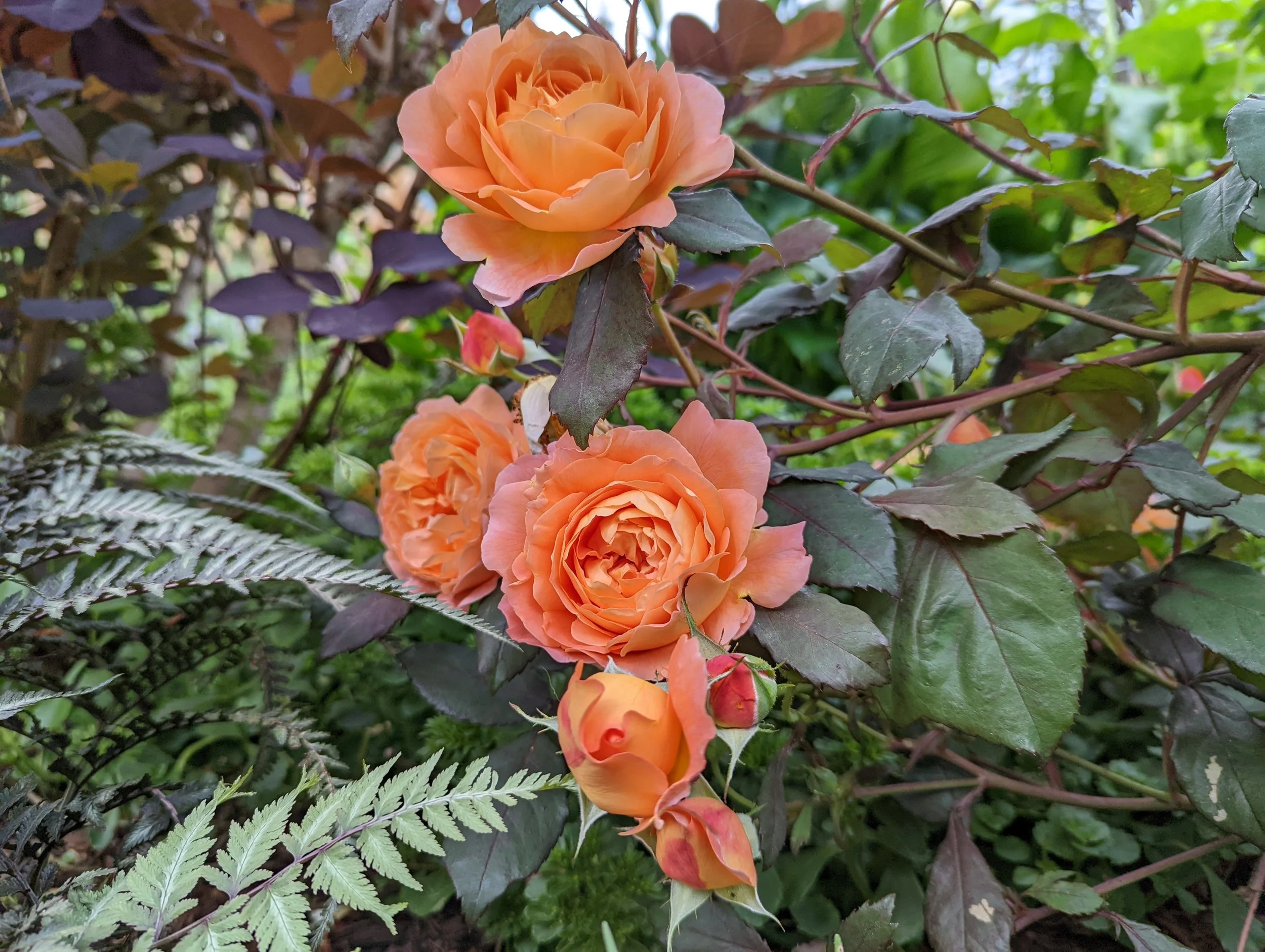
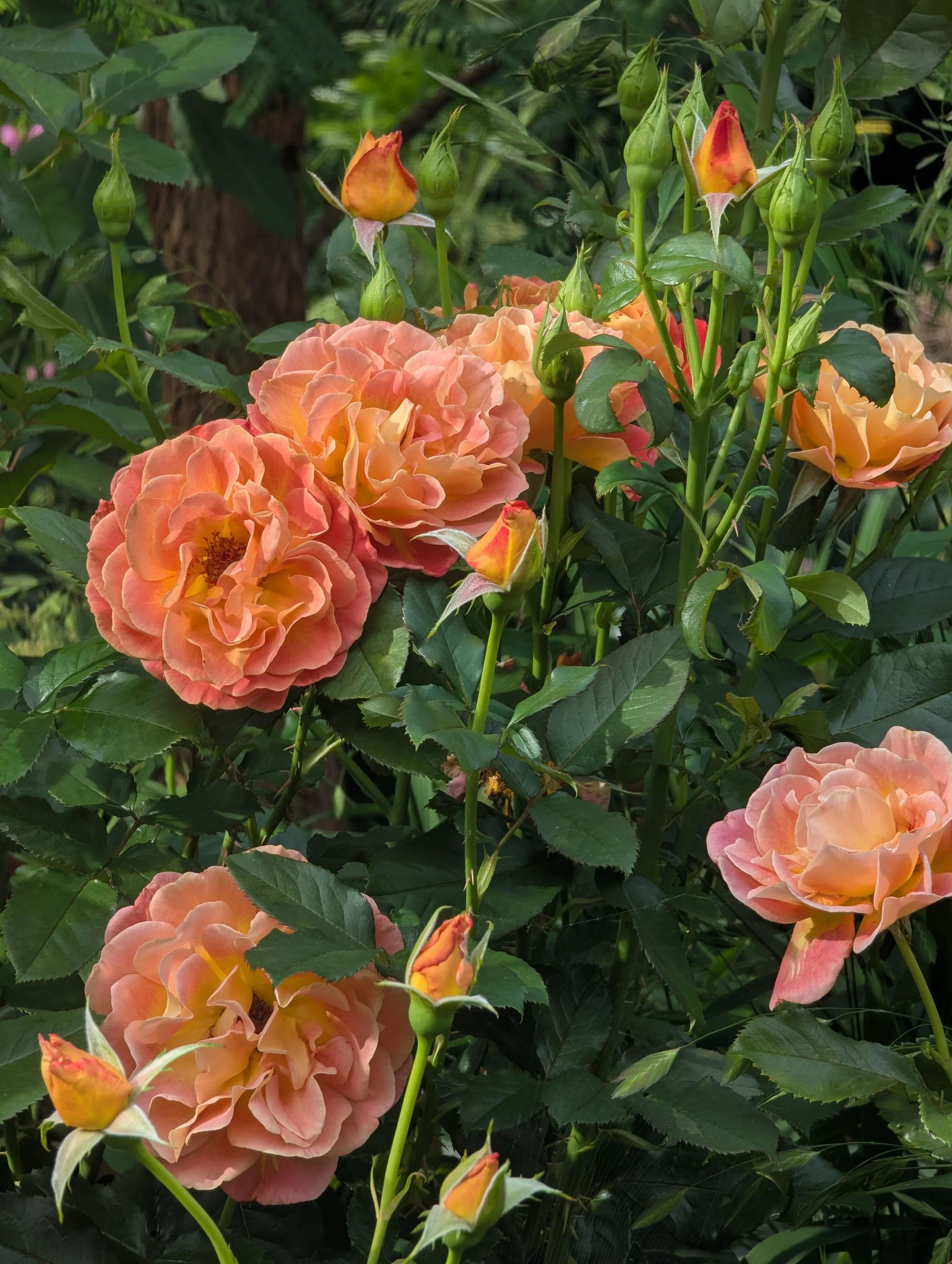
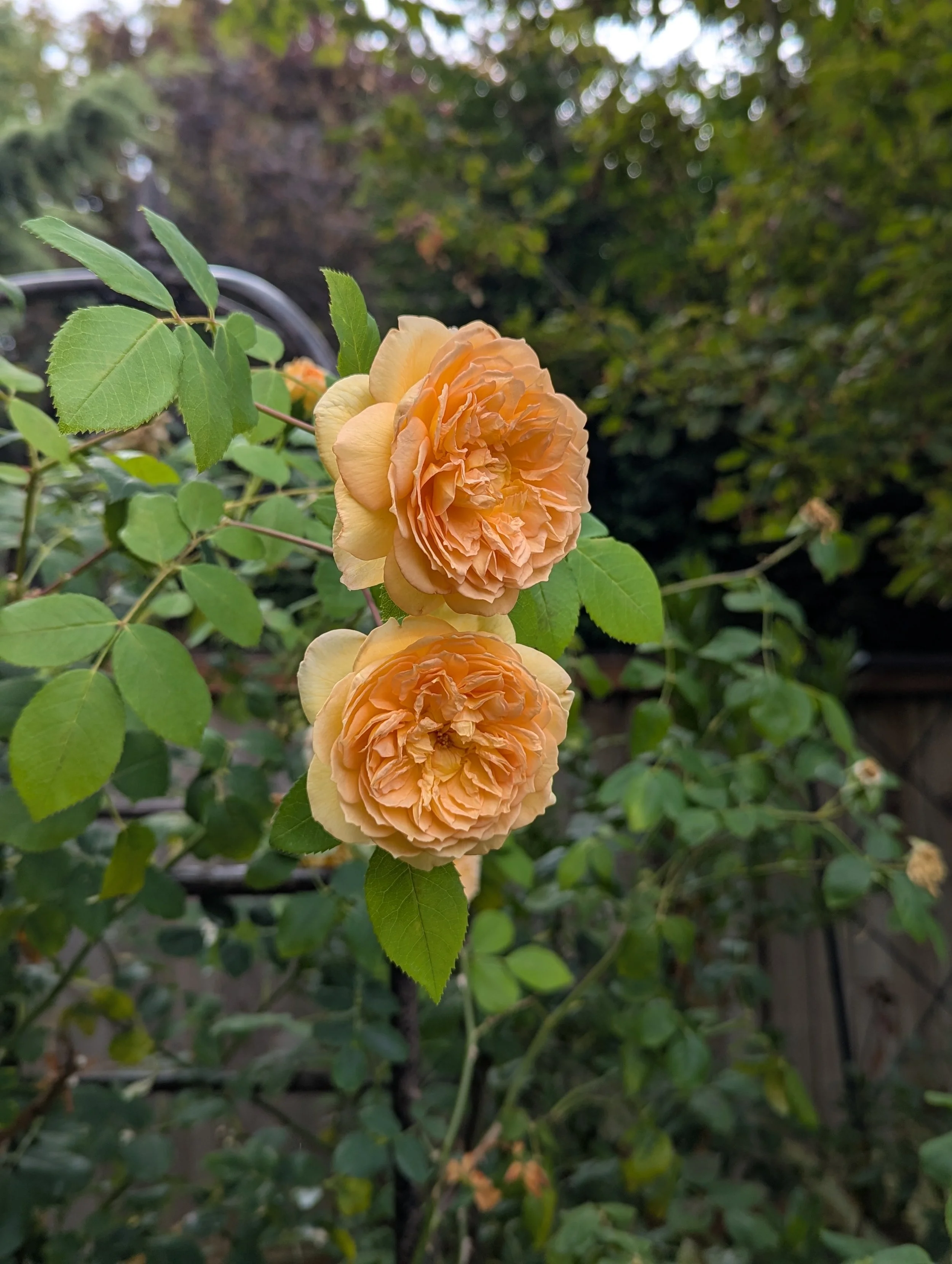
As with tulips, there are hundreds of varieties of roses from which to choose, in every color of the rainbow save blue. I’ve grown three orange ones, pictured above. The first is Lady Emma Hamilton, a David Austin rose which was beautiful but sadly died suddenly after three years. The second is Rosie the Riveter, a floribunda that lacks fragrance, but makes up for it with copious amounts of gorgeous blooms. The third is Bathsheba, another David Austin rose that is a climber; fingers crossed that Bathsheba will outlive my Lady Emma Hamilton! Bathsheba has a classic, delicate rose fragrance, and the stems easily reach the top of the eight foot trellis where I have it mounted.
Daylilies
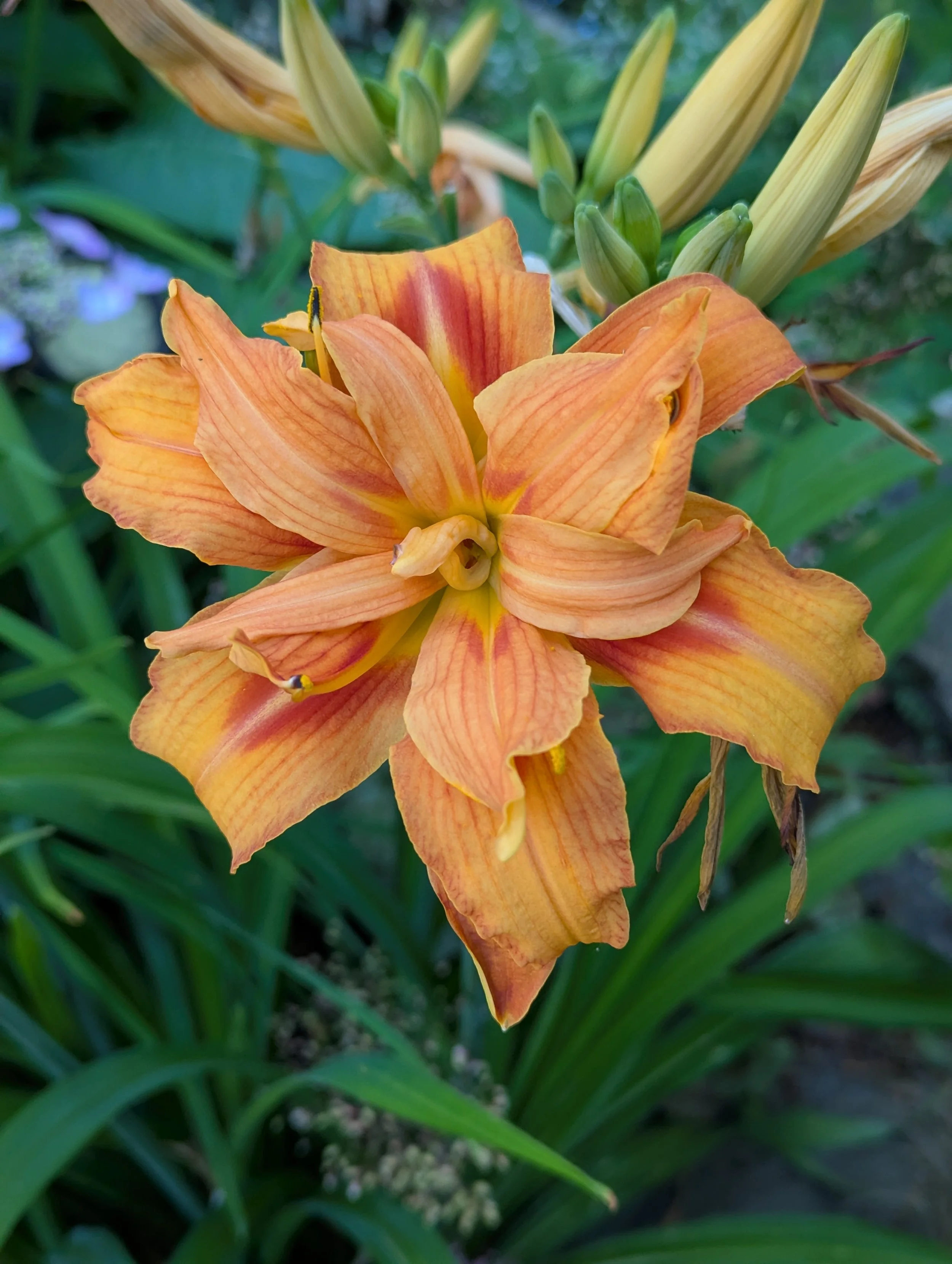
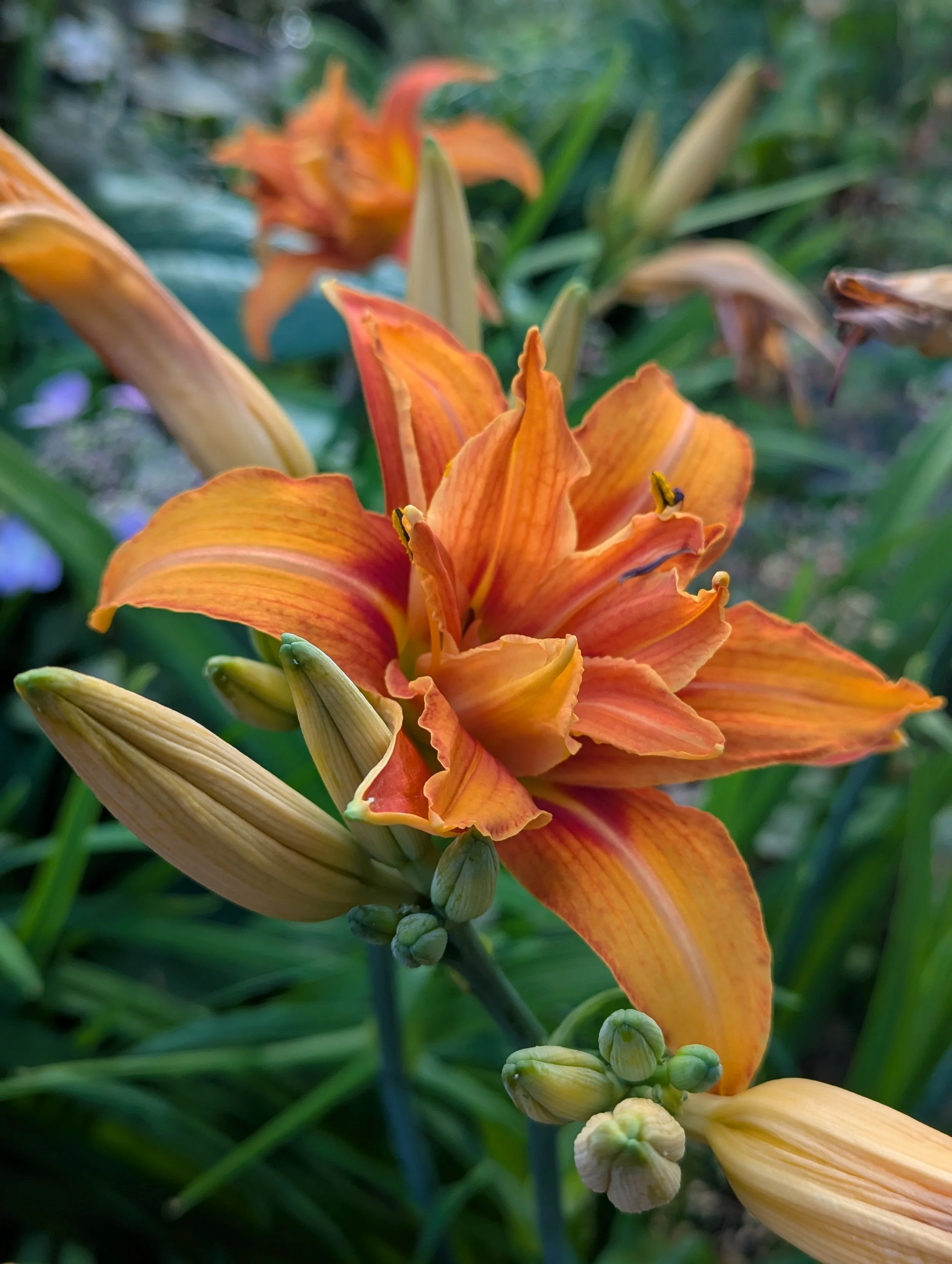
When daylilies were introduced to North America in the 1700s, they escaped cultivation and became a common roadside flower in the eastern and midwestern United States, earning them the nickname ‘ditch lilies’. I think many gardeners frown upon the classic orange daylily, preferring one of the zillions of hybrids with colors ranging from yellow to red through to deepest darkest purple. However, there is nothing easier to grow in the garden, and for weeks in midsummer who can genuinely look at these flowers and not be happy?? Only a cranky gardener. 😆
Terracotta Lupine
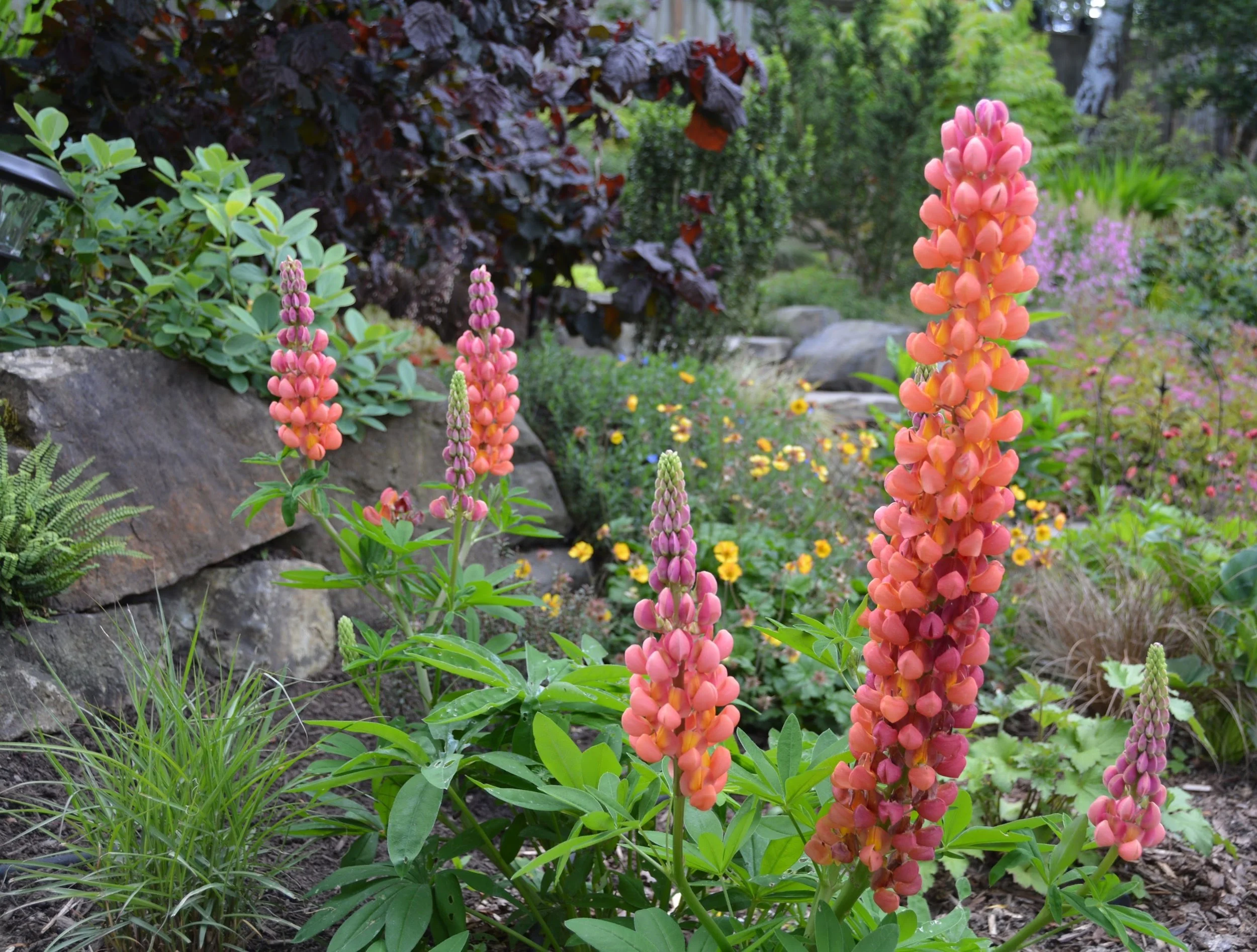
Wow!
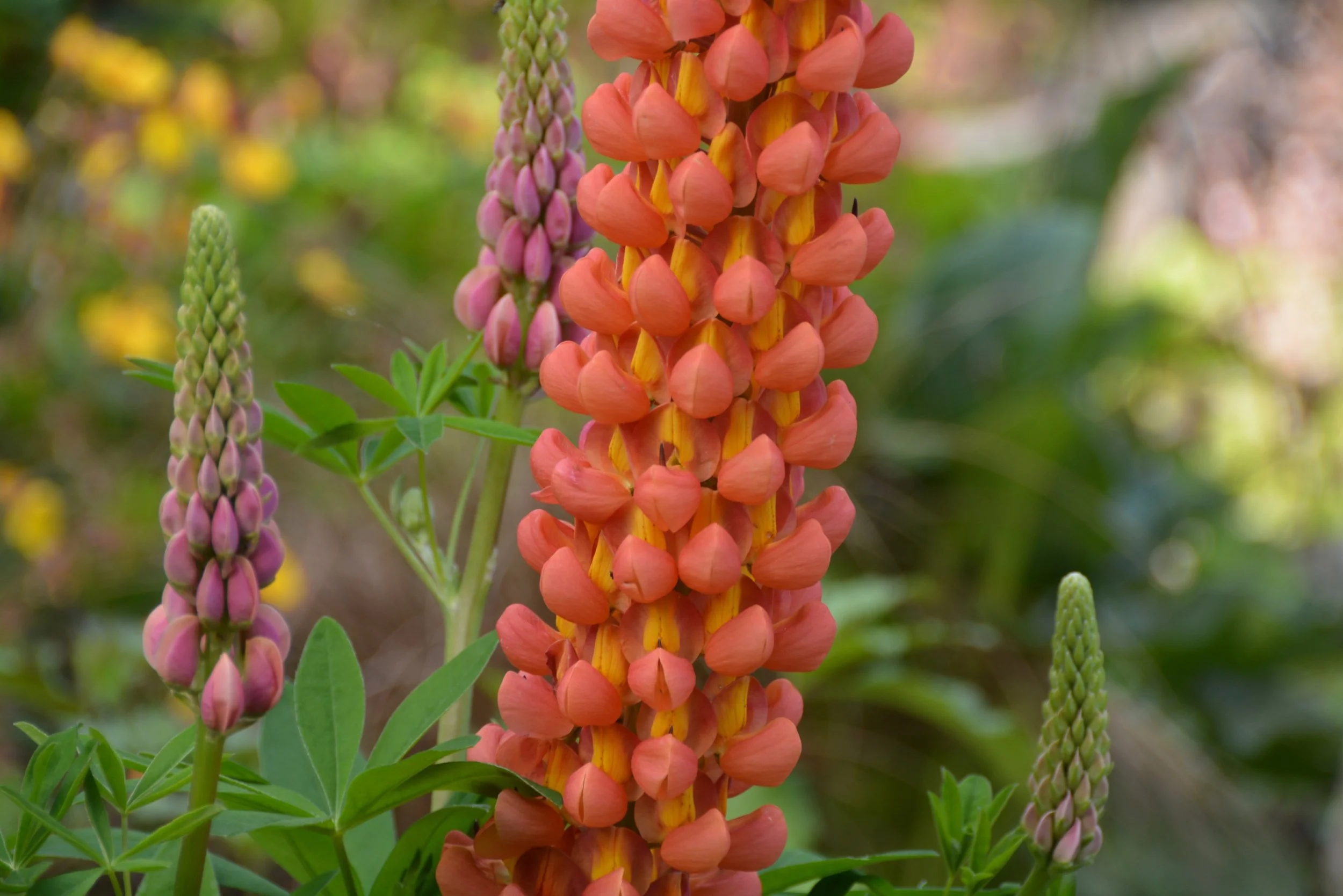
In 2018, I bought a fancy cultivar of lupine called “Terracotta”, one from a series called Westcountry™ (pictured above). That summer, it produced tall spires of eye-catching art with luminous plum, peach and orange tones. It was my favorite plant in the garden that summer. It returned the following summer, thought it didn’t bloom as strongly, and died after that. Lupine are often short-lived, two to four years, so in some ways this is not a huge surprise. But I still look at the photos I have from that plant and swoon. I reprised it in 2022, but I did not choose the site well, and got only one meager flush of flowers. Some year, I will save a spot with rich soil, perfect drainage and lots of sun and plant another one. Until then, I’ll keep swooning over these old pictures.
Best of the Rest
I’ll never publish this article if I write a big blurb for each flower. But for anyone seeking further orange-spiration (see what I did there??), here are a few more favorite lovelies I’ve featured over the years…
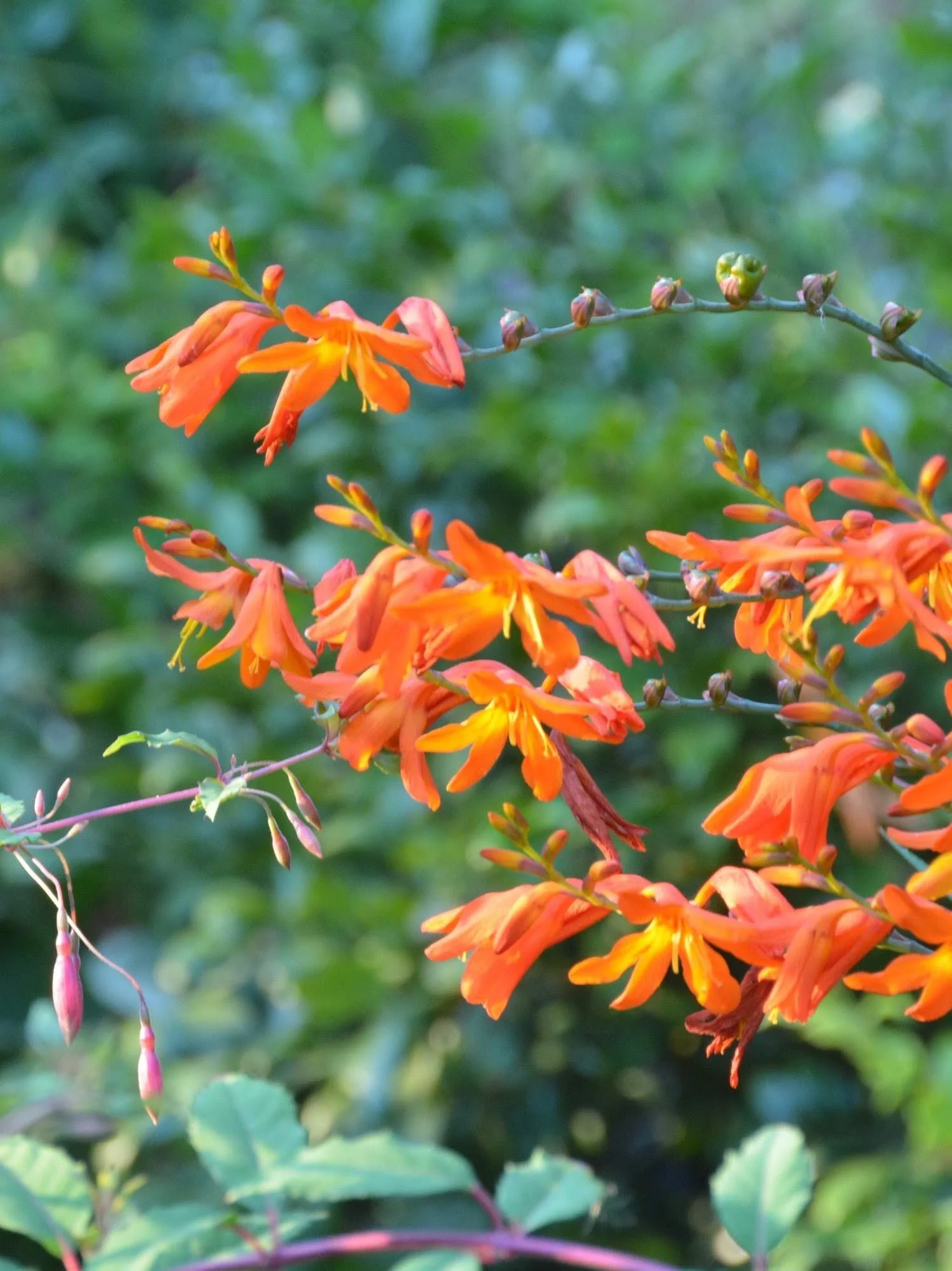
Orange crocosmia (photo 1 above): I’ve forgotten the cultivars I’ve grown, but they’re not that hard to find.
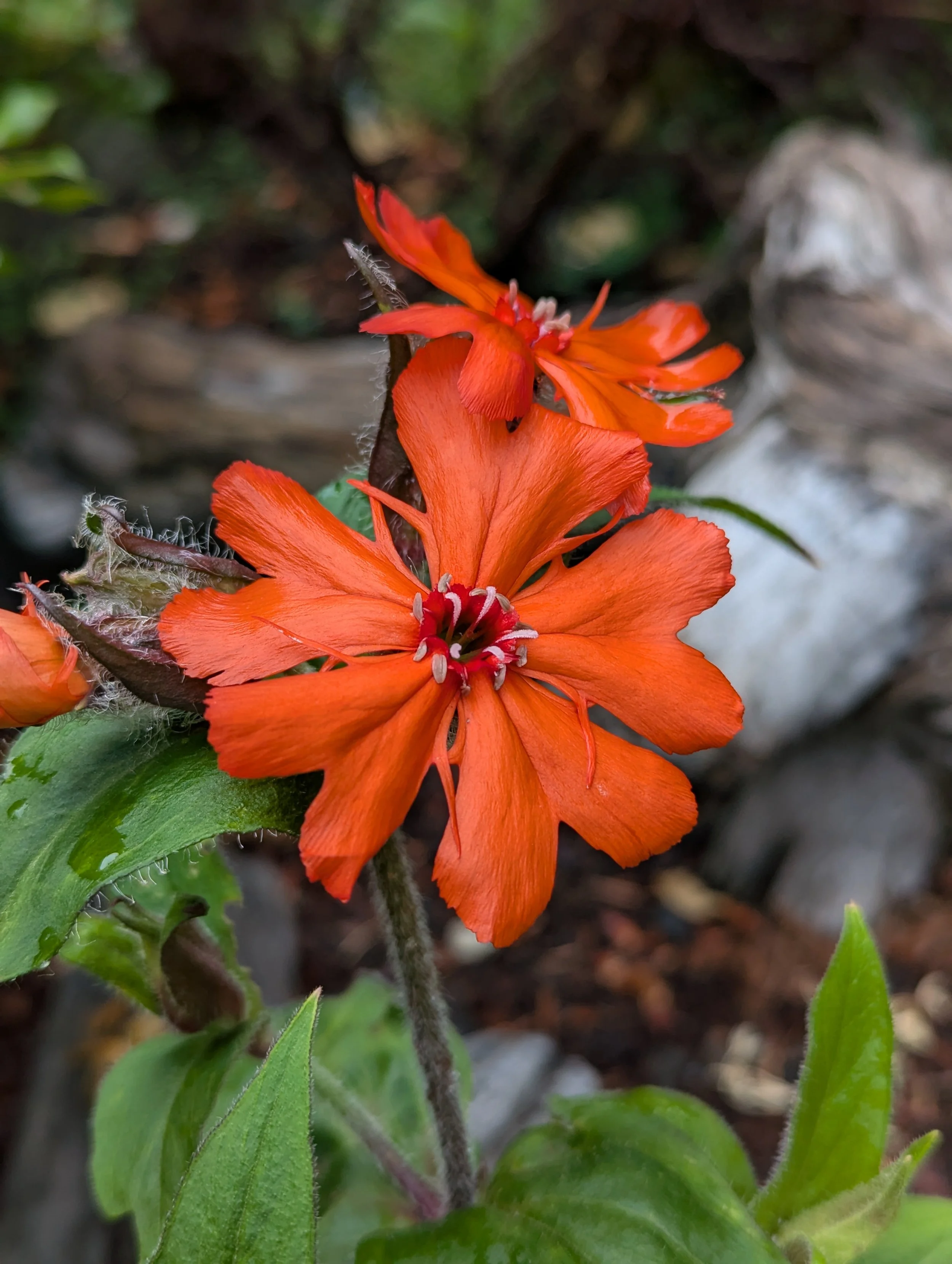
Lychnis x arkwrighti ‘Vesuvius’ (photo 2): the most intensely orange flower I’ve ever grown.
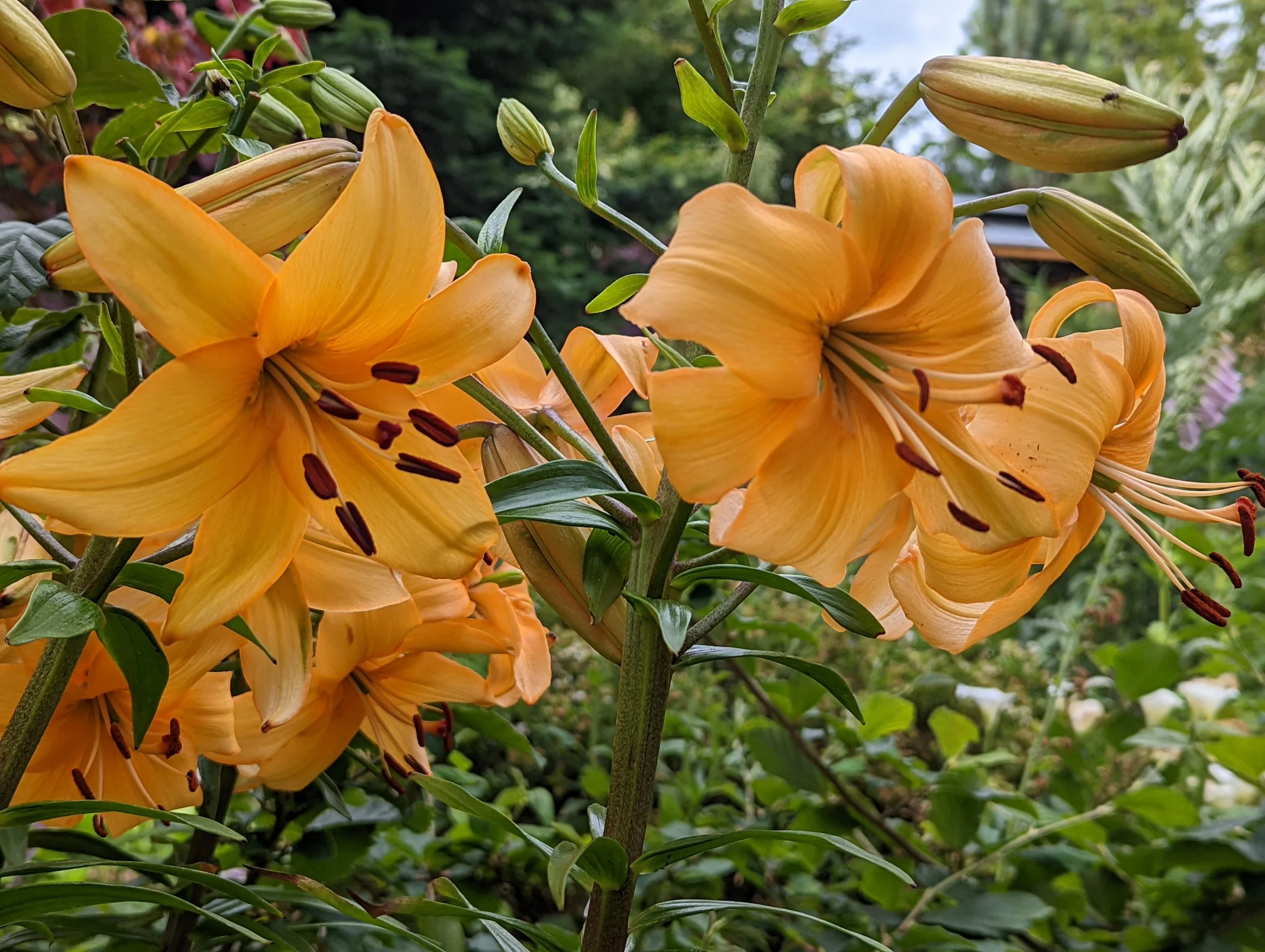
Asiatic lilies (photo 3): If tall and floriferous is your game, try tracking down a few orange lilies.
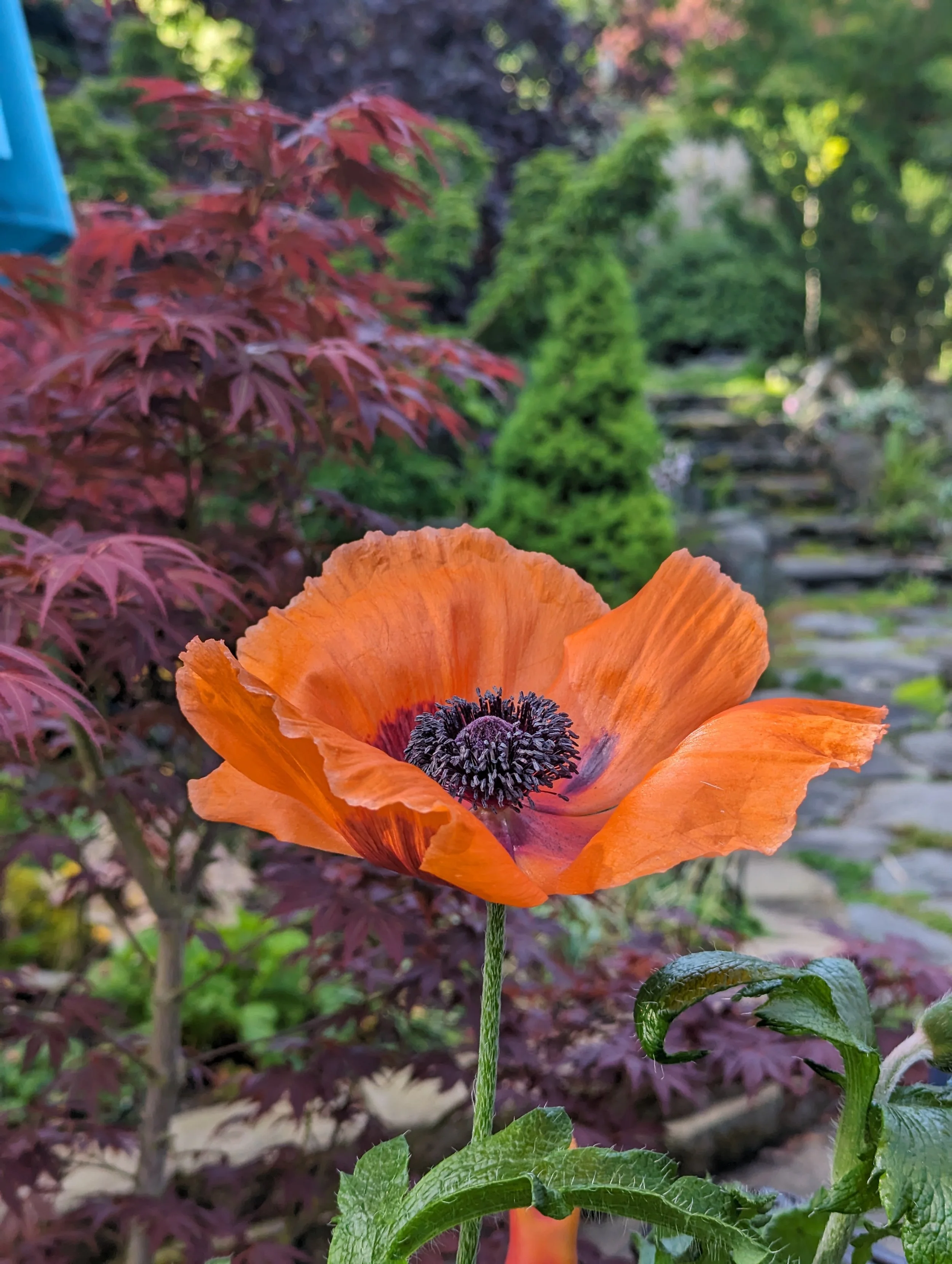
Oriental poppies (photo 4): The original wild Oriental poppy was orange with dark blotches, and it’s easy to find a modern cultivar with these colors (I’ve grown and love “Pizzicato”).
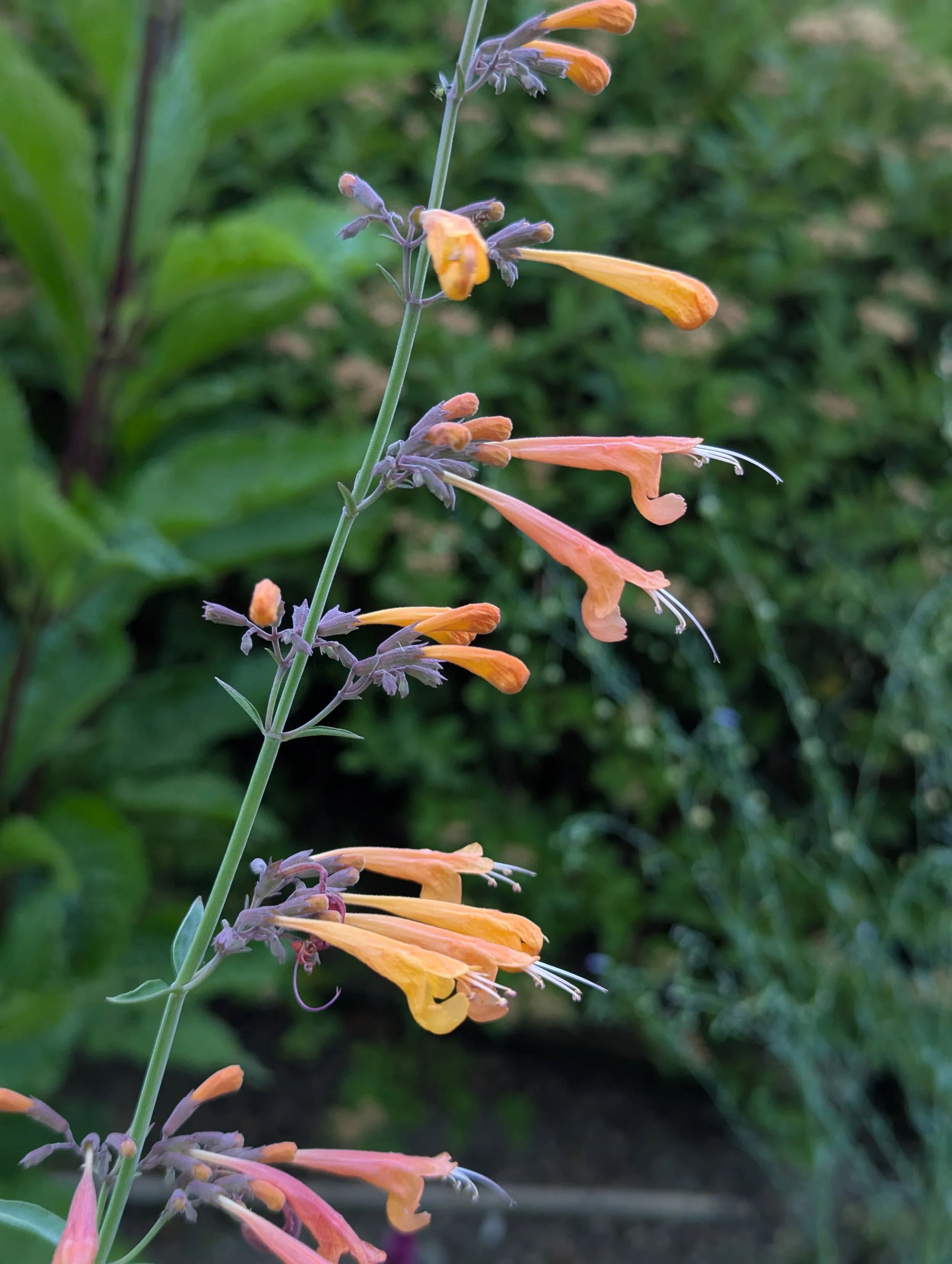
Agastache aka hummingbird mint (photo 5): Some of the varieties native to the US Southwest are orange, and modern hybrids like “Navajo Sunset” are based on them.
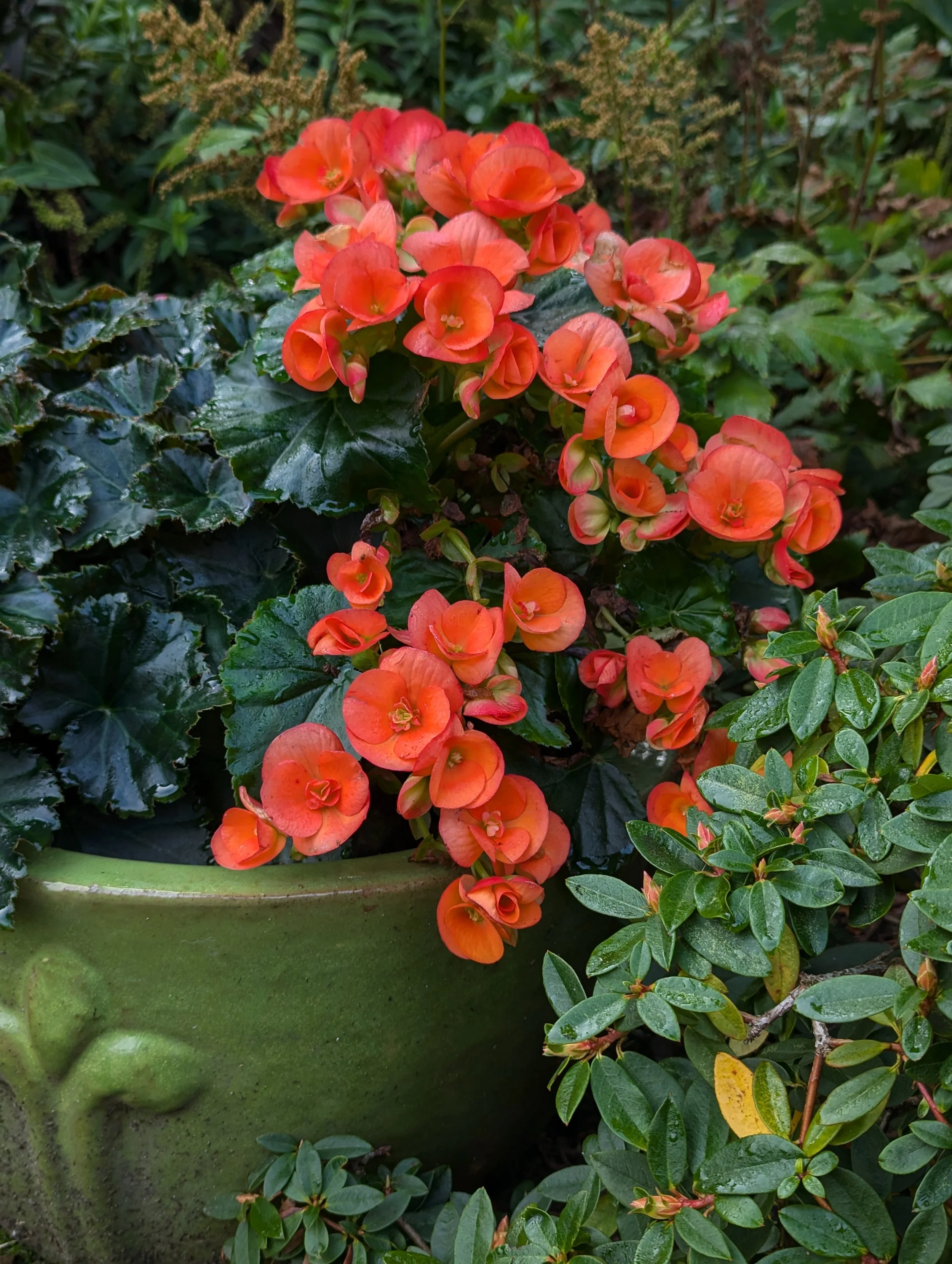
Zinnias, begonias (photo 6), nasturtiums and so many more…
I hope this little “tour de orange force” has inspired you to get over your hesitance to plant orange flowers. Don’t worry what the tittering gardeners say when they look at your garden. Celebrate what you love! Celebrate color. Enjoy orange. 🧡