Longest blooming plants in my garden this summer
As much as I love garden stalwarts like irises, gladiolas, and clematis, they and many other famous flowers have a fairly brief season when they’re actually in bloom. I really want to love lilacs, but they really only bloom for about two weeks per season. You have to think twice to give these kinds of plants high visibility spots, because when not in bloom they are not necessarily compelling garden features.
With some flowers, such as daffodils, there is a wide variety of cultivars available and you can extend the bloom season by picking both early and late varieties. But it sure is nice to have some workhorses in the garden, plants that you can put in high visibility spots and be rewarded with blooms for months, in some cases from spring right through til frost.
In 2026, the plants detailed below have been my workhorses. Note that I am in Seattle, on the cusp of zone 8b and 9a. We typically have about seven months from the last frost in late March or early April to the first frost in late October or early November. Mileage may vary with these plants in different climates.
Chilean potato vine
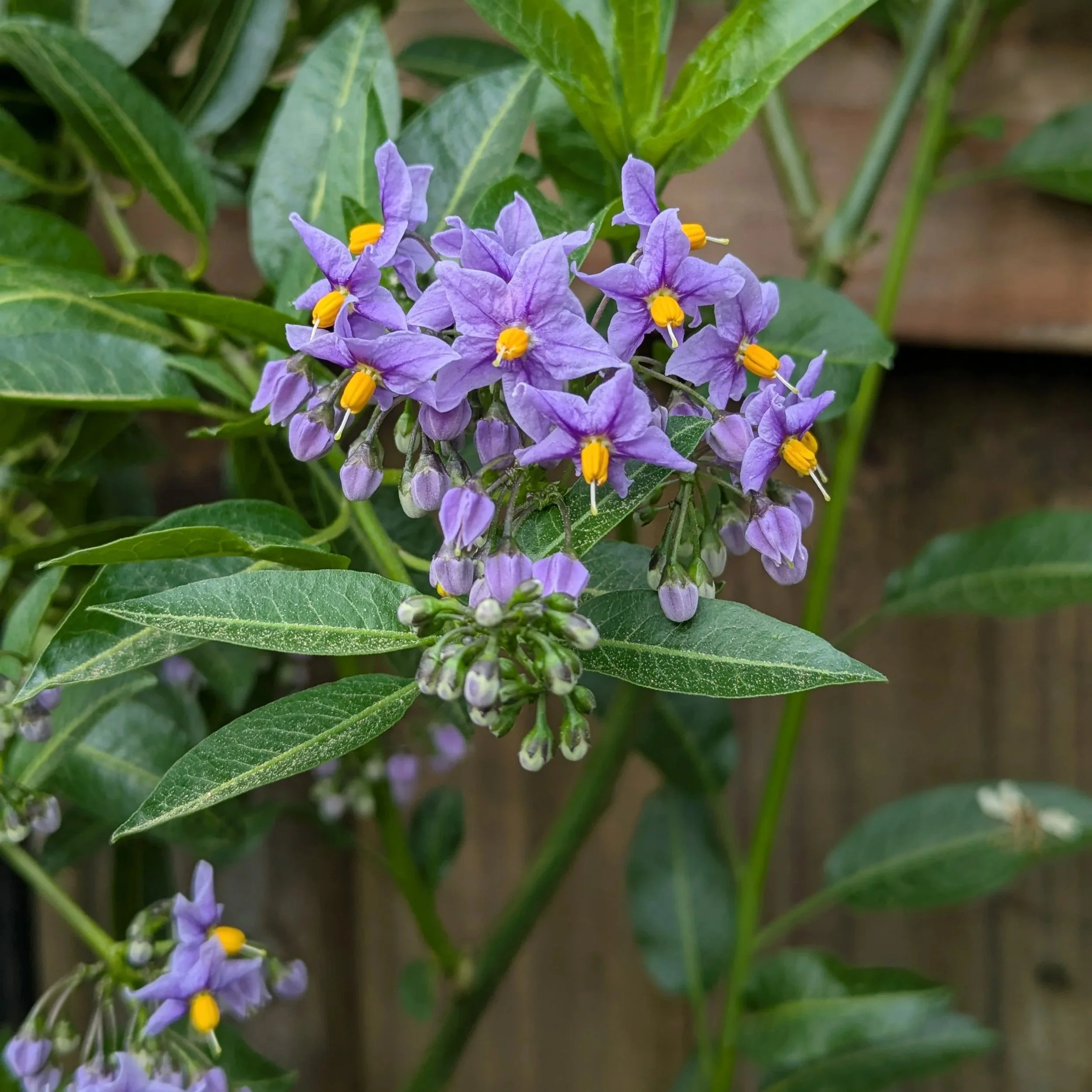
Solanum crispum ‘Glasnevin’, Chilean potato vine
Solanum crispum ‘Glasnevin’ is a native to Chile and Argentina, called either potato vine or potato shrub. This plant likes sun and heat, and is completely drought tolerant in Seattle’s dry summer. It’s a good choice for a western exposure next to your house that gets hot afternoon reflected heat that many plants hate. Despite the common name, it’s not a vine. It’s a rambunctious spreader with young stems that start out supple and bendy. It likes to find something to lean on, such as a fence, or tall trellis, or even a neighboring tree. Once supported, they firm up as they age, and produce masses of branching flowering stems. This plant starts flowering in April for me and continues well into fall.
Anise hyssop
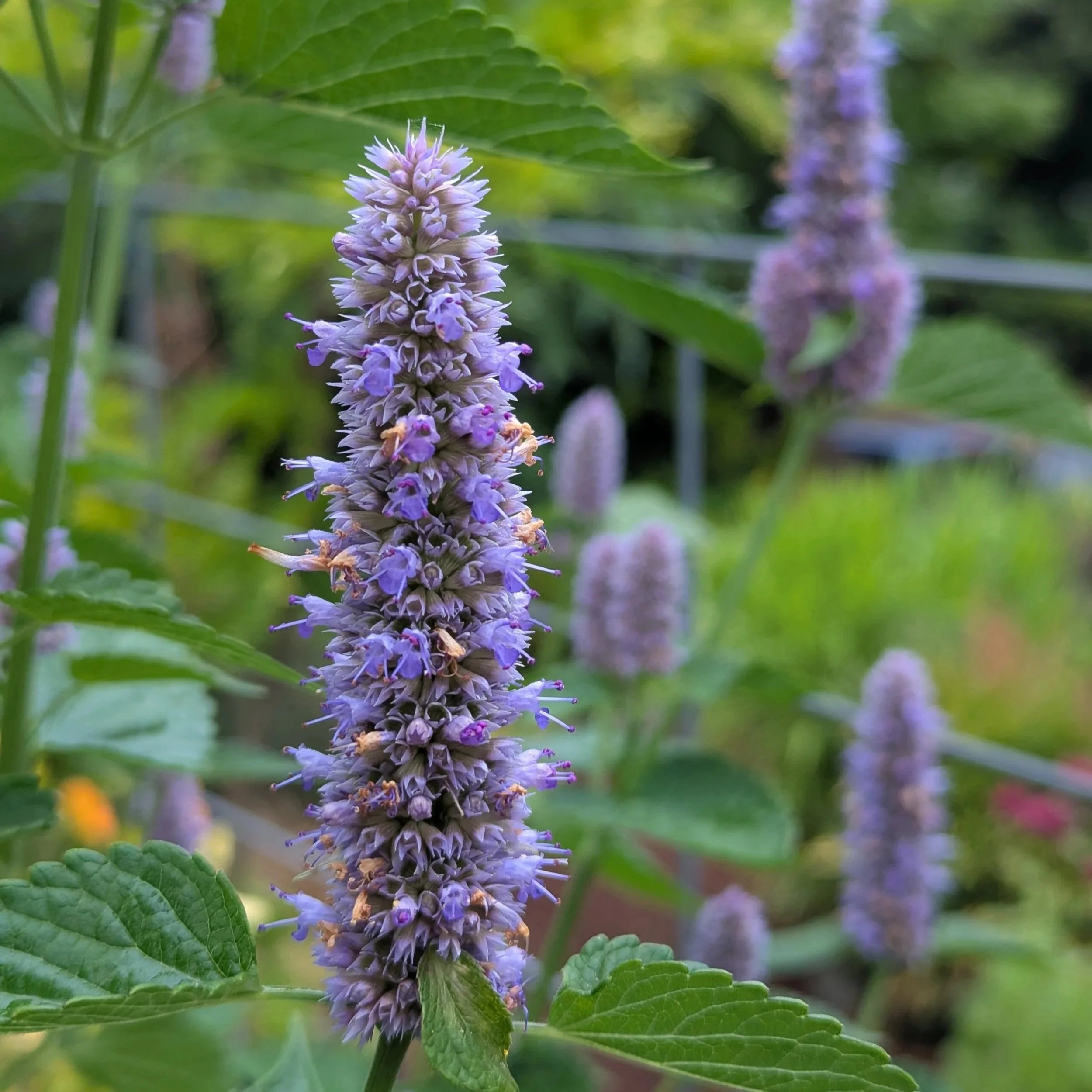
Agastache foeniculum, anise hyssop
Agastache foeniculum or anise hyssop is a wildlfower native to North-central North America. It has been cultivated for ages with uses in herbal medicine, as a tea, and to attract bees. Sturdy, upright flowering stalks composed of many tiny purple blossoms are active with pollinators beginning in late spring. It can be deadheaded to prolong flowering well into late summer, and in autumn the spent flower heads still look attractive, even if they’re not actively bringing the bees any longer.
Brazilian Bellflower
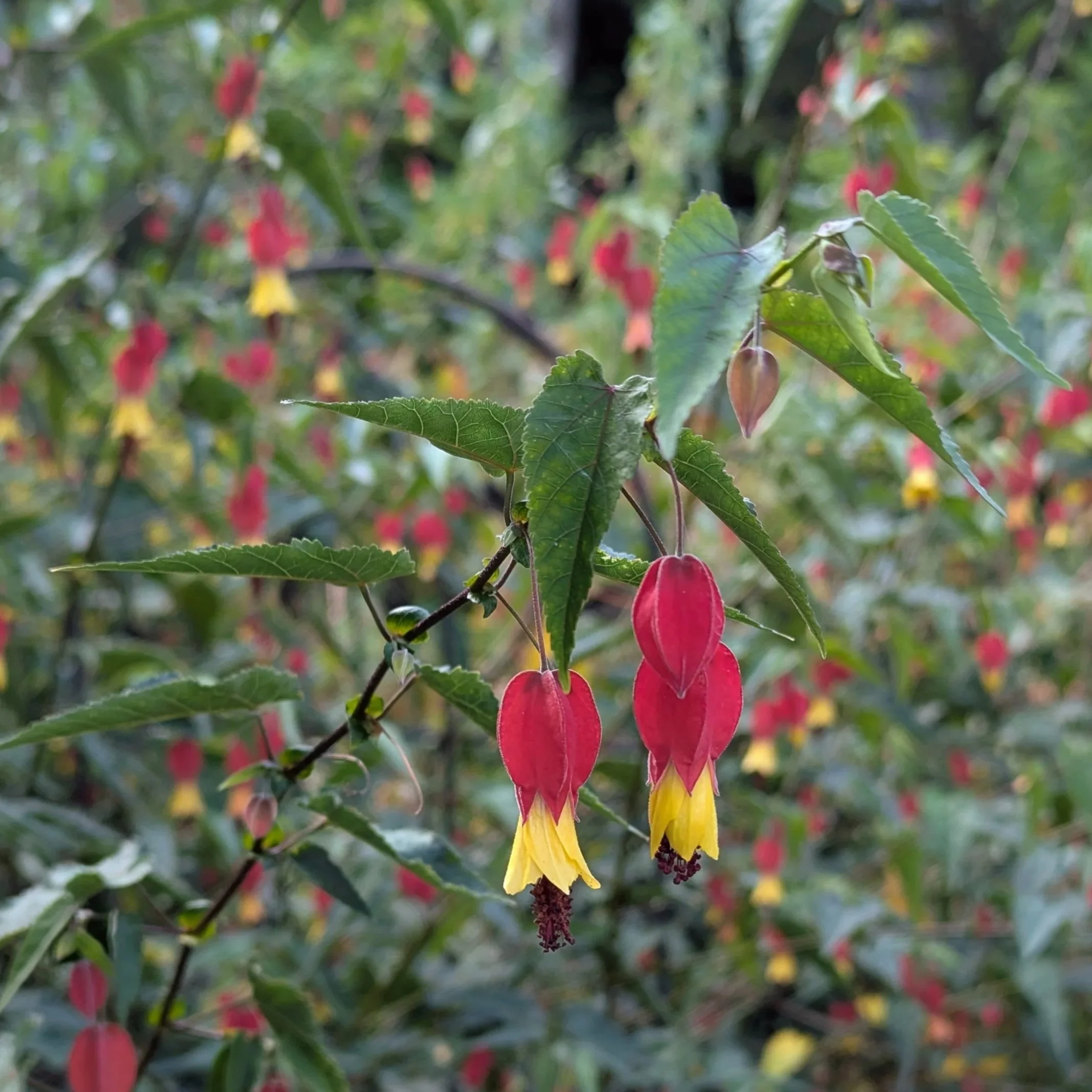
Abutilon megapotamicum, Brazilian bellflower
This plant gets asked about more than anything in the garden besides Erin’s living willow structures. There are lots of different abutilon species, many with a common name of flowering maple. Abutilon megapotamicum is often called Brazilian bellflower. It has narrow heart-shaped leaves and fascinating red and yellow lantern-like flowers that are irresistible to hummingbirds. It begins flowering for me in June and continues well into December or even January in a mild winter. It is found in the mountainous southern regions of Brazil, so less tropical than we typically associate with Brazilian species, and is hardy to zone 7. It likes a sunny spot and to be watered occasionally during the dry Seattle summers, rewarding with a huge supply — I mean hundreds and hundreds — of flowers.
Munchkin Oakleaf Hydrangea
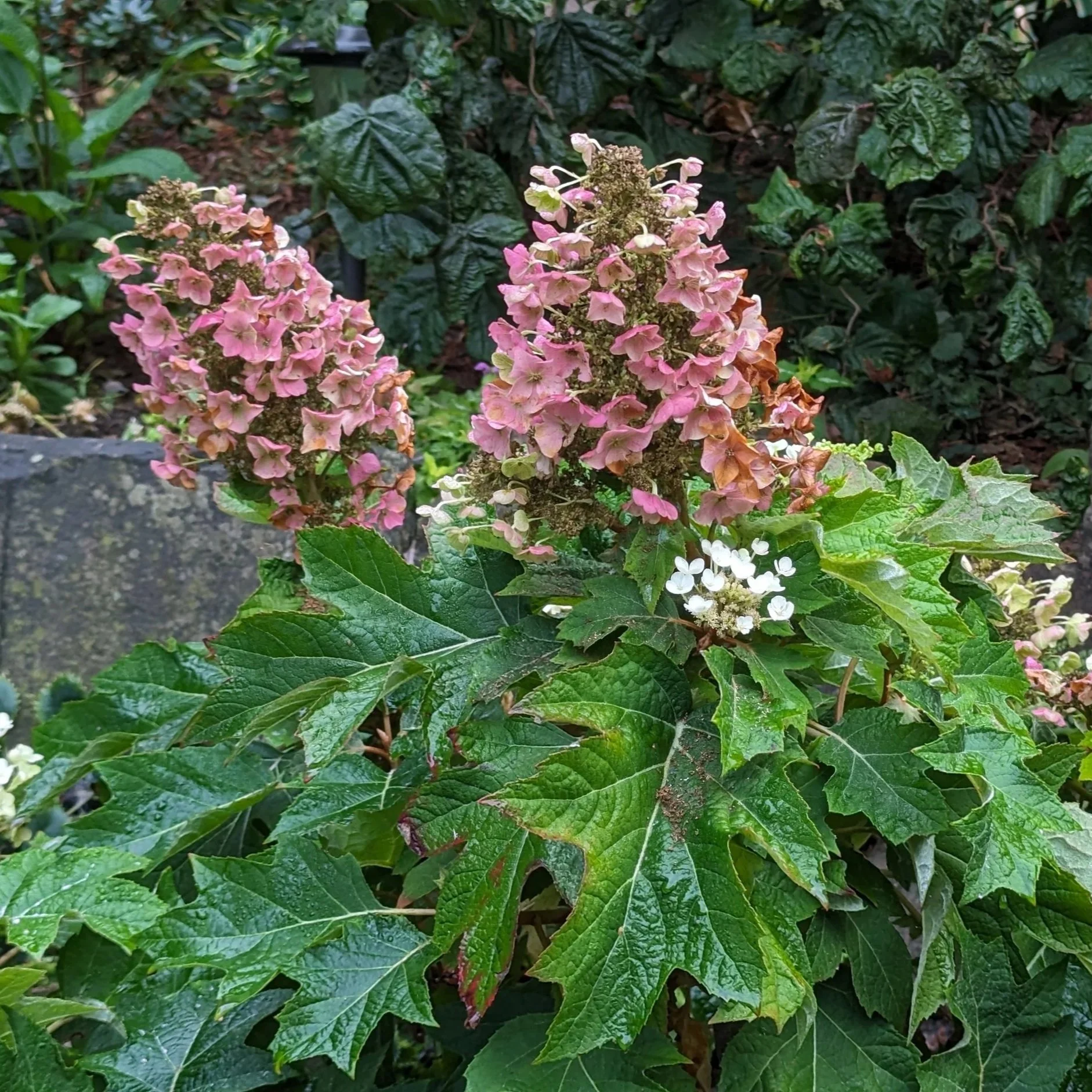
Hydrangea quercifolia ‘Munchkin’, Munchkin oakleaf hydrangea
Hydrangeas are famous for offering nearly year-round interest. Flowers begin in late spring, last for months on the shrub as they age into autumnal tones, and remain as sculptural interest as papery ornaments right through winter. One of the lesser used types in gardens is oakleaf hydrangea, a species which originates in Eastern North America. It is generally tougher and more drought tolerant than other species, which I especially appreciate as I am developing a garden that copes naturally with Seattle’s dry summers. The straight species can be quite large, but there are dwarf varieties, such as Munchkin which I have in my garden. Remaining around four feet tall and wide even after several years, this is an easy drought-tolerant shrub to fit into urban gardens. With pink blushes on the white flowers beginning in September and foliage that is nearly evergreen, it offers a super long season of interest.
Firebird Penstemon
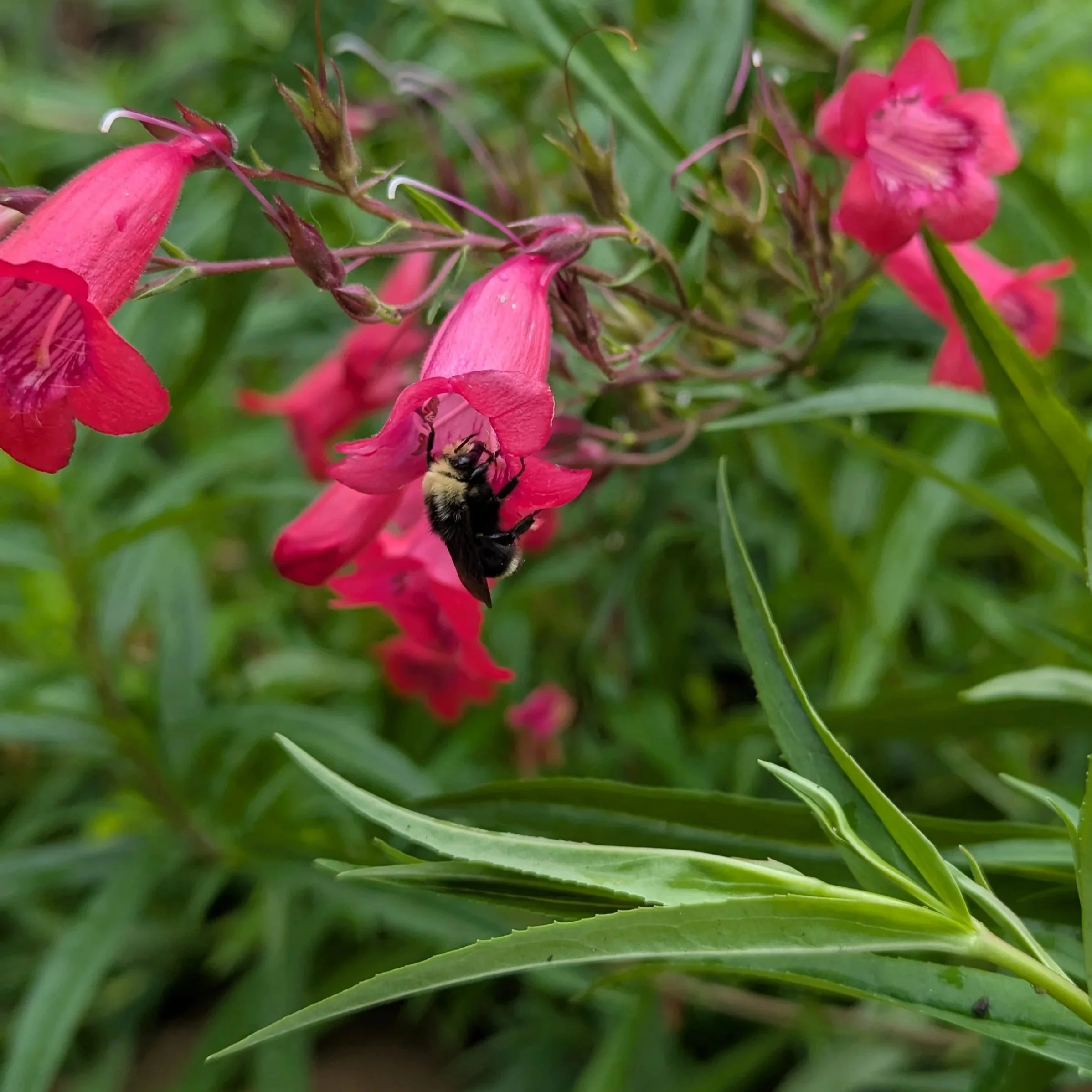
Penstemon hybrid called Firebird
Penstemon have the old-fashioned name of beardtongue for their unique structure that allows bumble bees access to their nectar (and a secret means to share pollen as well!). There lots and lots of different penstemon species, and many hybrids have been cultivated over the centuries as well. Firebird is an old cottage garden favorite in use in gardens since the 1930s. Like many penstemons, it prefers a sunny hot spot, and doesn’t need much if any supplemental water once established. It is a good candidate for gravel gardens. Firebird is a repeat bloomer that just goes and goes, from late spring until frost for me. It definitely helps to deadhead it, but this is a super easy task to complete in the pursuit of more flowers.
Hardy Fuchsia
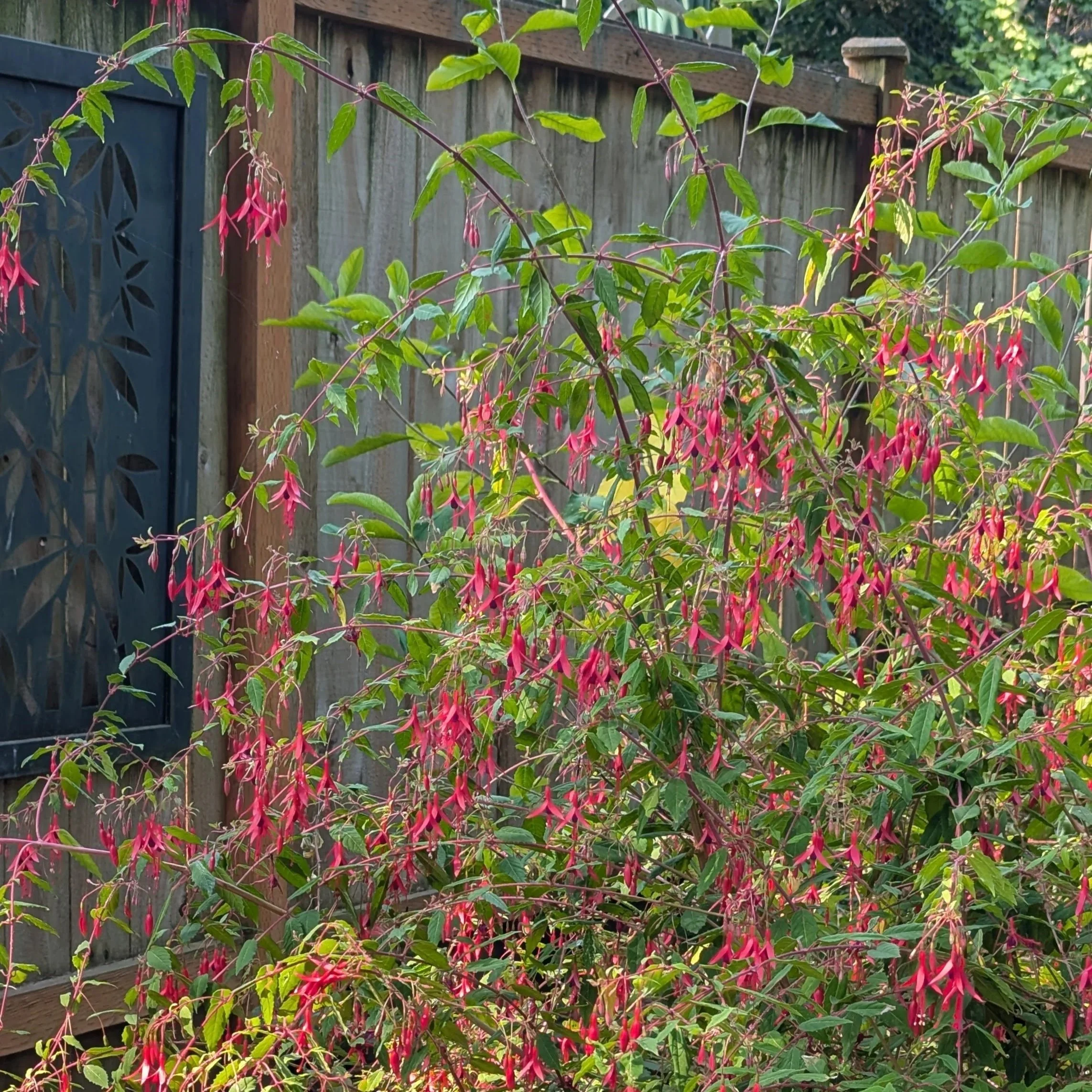
Fuchsia magellanica, the hardy fuchsia
Hardy fuchsias are native to southern Chile where the Strait of Magellan is located (which lends the plant its specific name). There are plenty of cultivars. I don’t even know which one I have, as I was given my plant by a neighbor in my first year as a gardener. Mine is not one of the fancy ones with larger leaves or showier blooms, and is all the hardier because of that. Fuchsias stems can die back partially or completely in a zone 8 winter, but in a mild year like 2025 the stems don’t die. My fuchsia this year started flowering in May, and will continue until frost. A hummingbird and pollinator magnet, this is such an easy care shrub for the landscape. And unlike many others on this list, it’s perfectly happy in bright or dappled shade.
Society Garlic
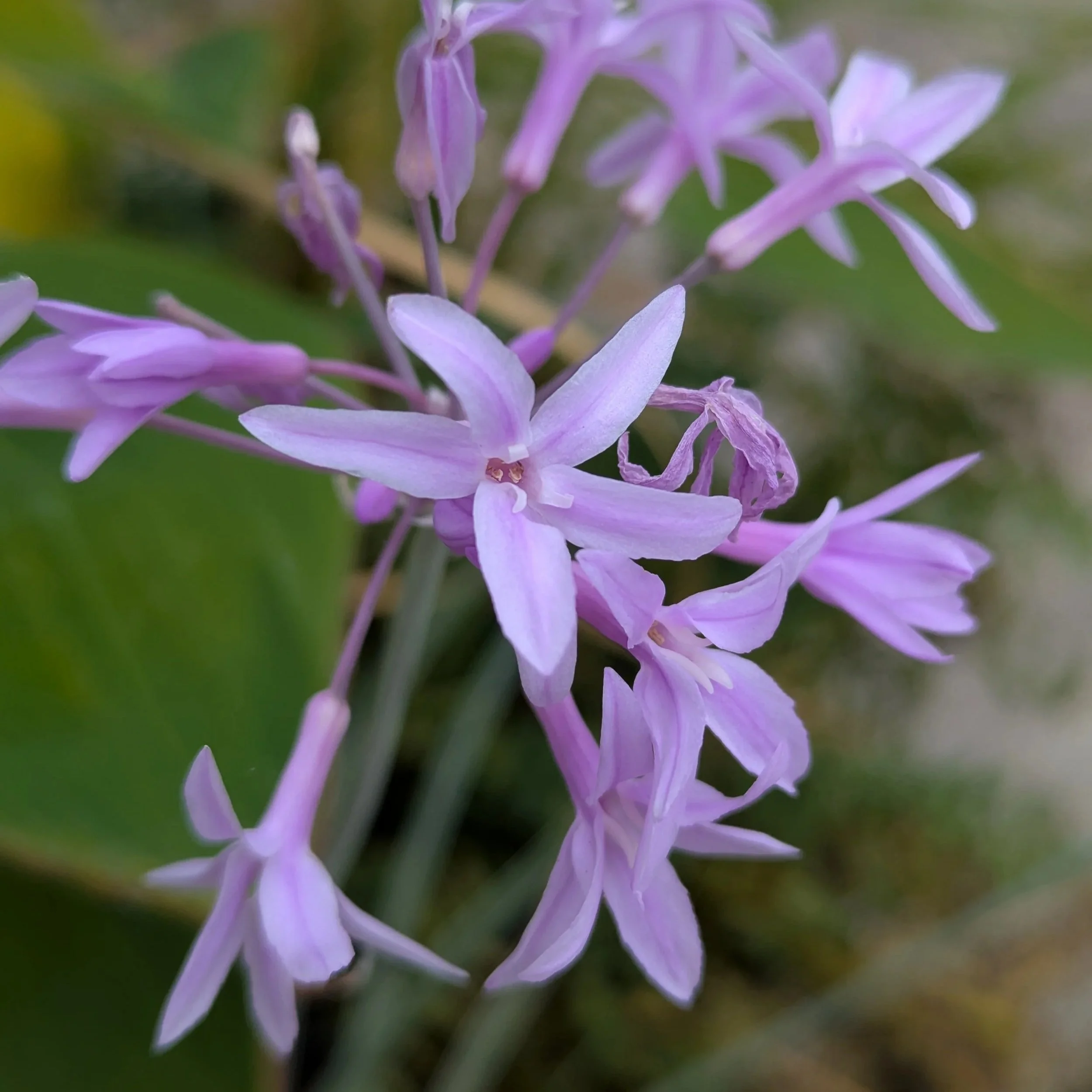
Tulbaghia violacea ‘Variegata’, Variegated society garlic
I’m not sure why society garlic is not more widely used. It is a plant that can literally be happy sitting in the shallows of a pond, in boggy wet soil, or upland in dry soil. Given some sun, it will flower from spring until fall. The strappy foliage on the cultivar I have is variegated, giving it a glaucous, silvery look. All parts of this plant are edible, but it features a garlicky aroma, so may be resistant to bunny and deer for those who have those challenges. It is not actually in the garlic (allium) family, and it was preferred to garlic in culinary circles by “high society” Victorians because its flavor does not linger the way garlic does (hence its name).
‘Autumn Colors’ Rudbeckia
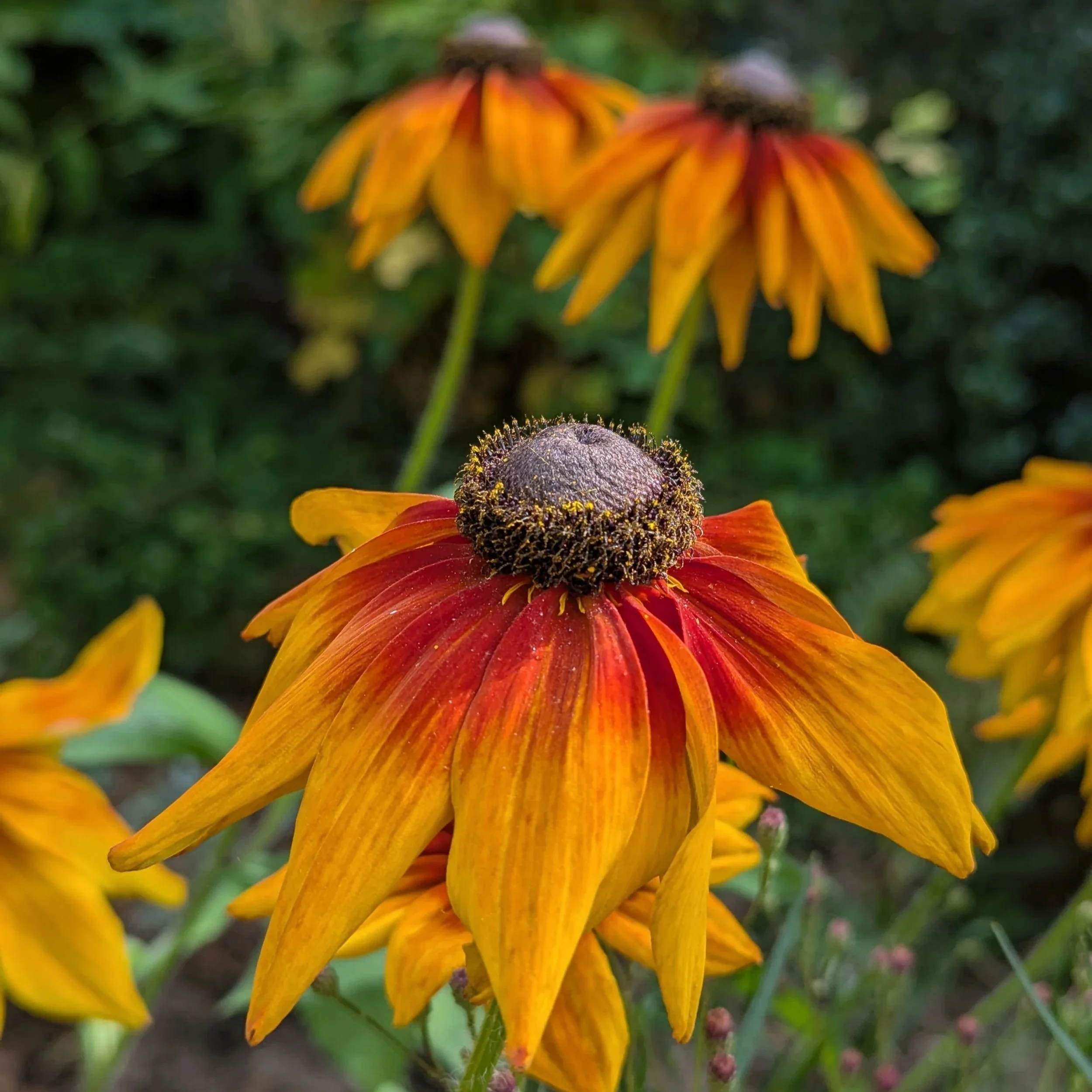
Rudbeckia hirta ‘Autumn Colors’, Autumn Colors rudbeckia
Many rudbeckias are known as Black Eyed Susans. There are several prominent garden species, and many, many cultivars have been selected over the centuries. Many have long flowering seasons (though some don’t, so do your research!). The one I particularly enjoy for its long flowering show is a cultivar of rudbeckia hirta called ‘Autumn Colors’. These have very fuzzy foliage topped by outlandishly colorful two-tone flowers from mid-summer into autumn. Individual plants may last a season or two, but they reseed easily, giving the appearance of a perennial. As a wonderful bonus, the flowers on reseeded neighbors are not often the same. The outer color may be pure yellow to yellow-orange, and the center color may be anything from maroon to orange to a dark burnished copper. I’ve had them occasionally be a solid color, from yellow-orange to copper. I love surprises in the garden, and this delivers!
‘Cape Sebastian’ Beach Daisy
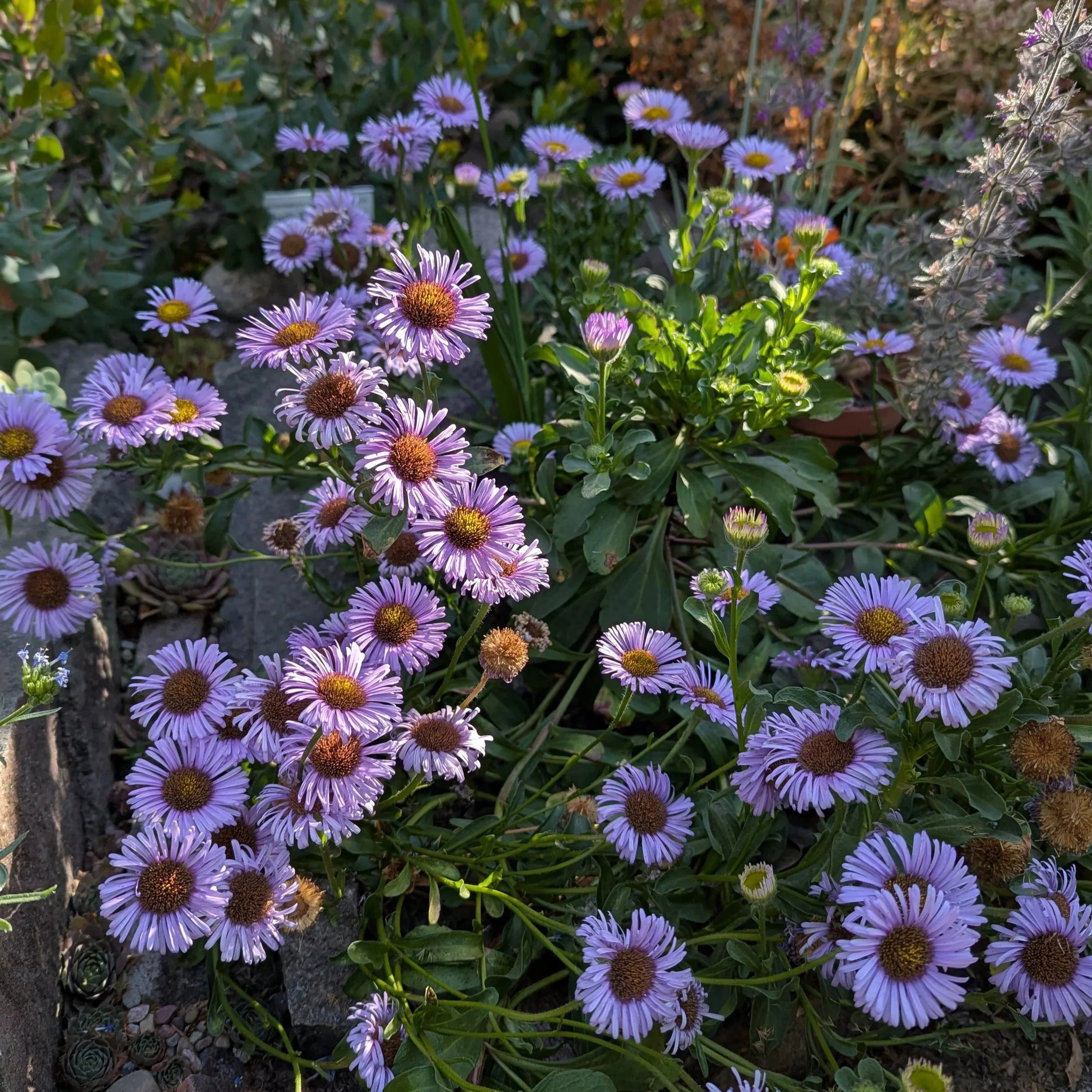
Erigeron glaucus ‘Cape Sebastian’, Cape Sebastian beach daisy
Natively found along the coast of California and Oregon, erigeron glaucus is perfectly at home in Seattle as well. It is completely adapted to our dry summers, and is exceedingly useful in hot spots that receive lots of southern and western sun. This Cape Sebastian cultivar, a native selection, will pump out aster-like purple ray flowers with a contrasting center from late spring into autumn.