Living willow structures in the garden
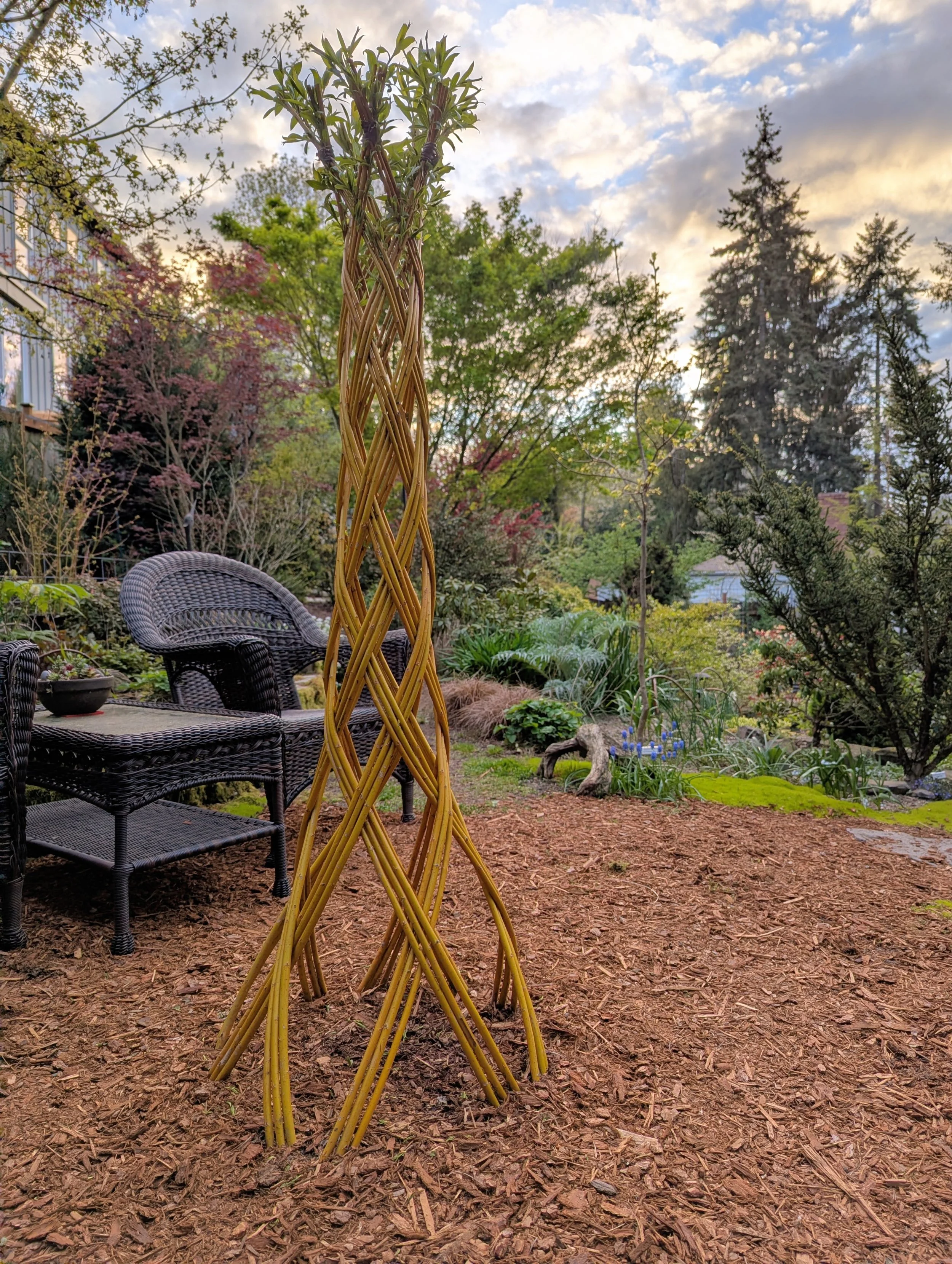
A living willow harlequin… quite the conversation starter!
Erin started weaving willow baskets in 2023 and fell in love with this unbelievably useful natural material. However, willow rods for use in basketry are fairly rare and expensive in the United States, which does not have a strong history of willow for weaving. So, we planted a field of willow in 2024 and started harvesting a bit of willow that winter (it’s a fast-growing plant!). The second harvest in December of 2025 gave her a LOT of tall stems, too big for basketry but perfect for living willow structures.
Due to how easily it roots and its famous flexibility, willow can be convinced into all manner of forms. Europeans have been experimenting with live fences, tunnels, obelisks, huts and much more for centuries. Check out Bonnie Gale’s Living Willow website to get an impression of modern possibilities. With a supply of tall stems, you simply push stems into the ground and start creating (though freshness of the stem and time of year—early spring—are important).
For her first experiments, Erin couldn’t wait for her own high quality basketry willow to be harvested, and built a fence panel and an obelisk in the garden using wild-harvested willow in 2024, pictured below.
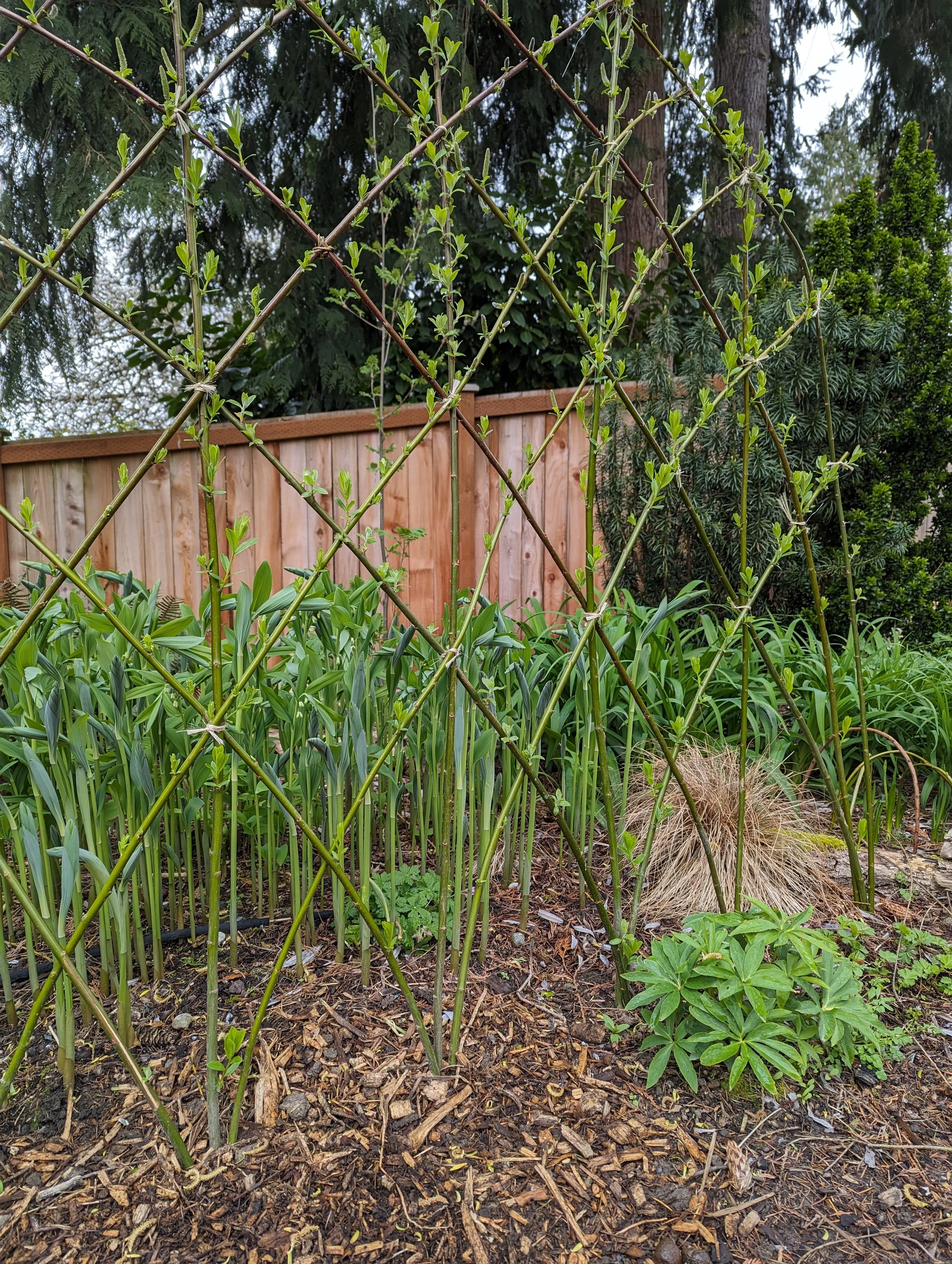
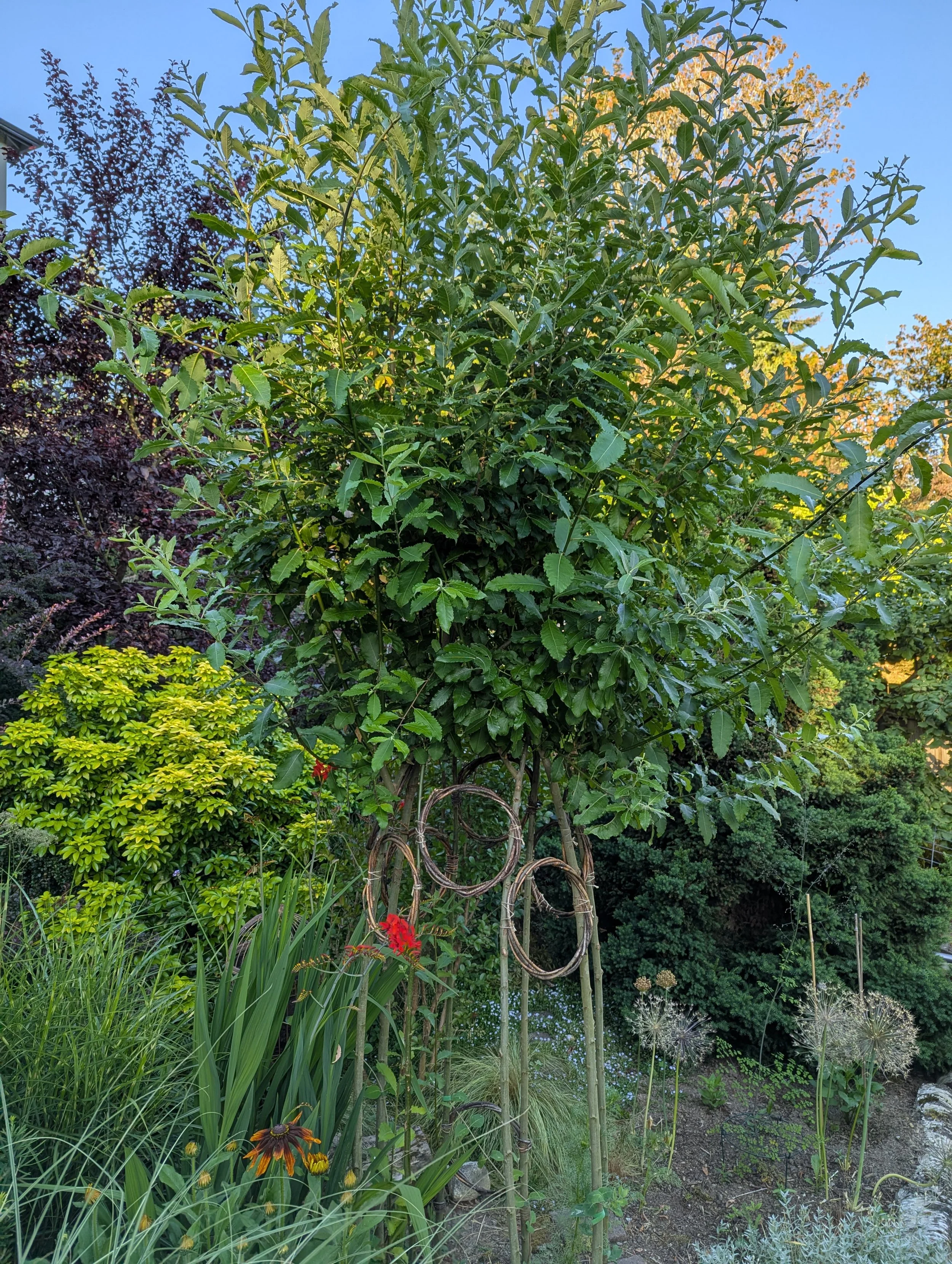
These first projects were quite interesting to watch develop. Each stem used in a living willow structure wants to root and become its own tree or shrub, so new growth pops out all over (though it is most concentrated toward the top). As the maintainer of a willow structure, you get to decide how much new growth to prune off. You can either develop a wooly beast of a thing, with growth and leaves all over, or go for a more refined look allowing stems to develop only on certain areas. The obelisk pictured above sprouted tall stems in its first year that we did not prune, and it started to look for all the world like a willow tree with a fascinatingly airy woven ‘trunk’.
If the stems used in creating a living willow structure are all from the same species of willow, as they grow the stems will eventually fuse together wherever they cross, making the structure incredibly strong.
New structures in 2026
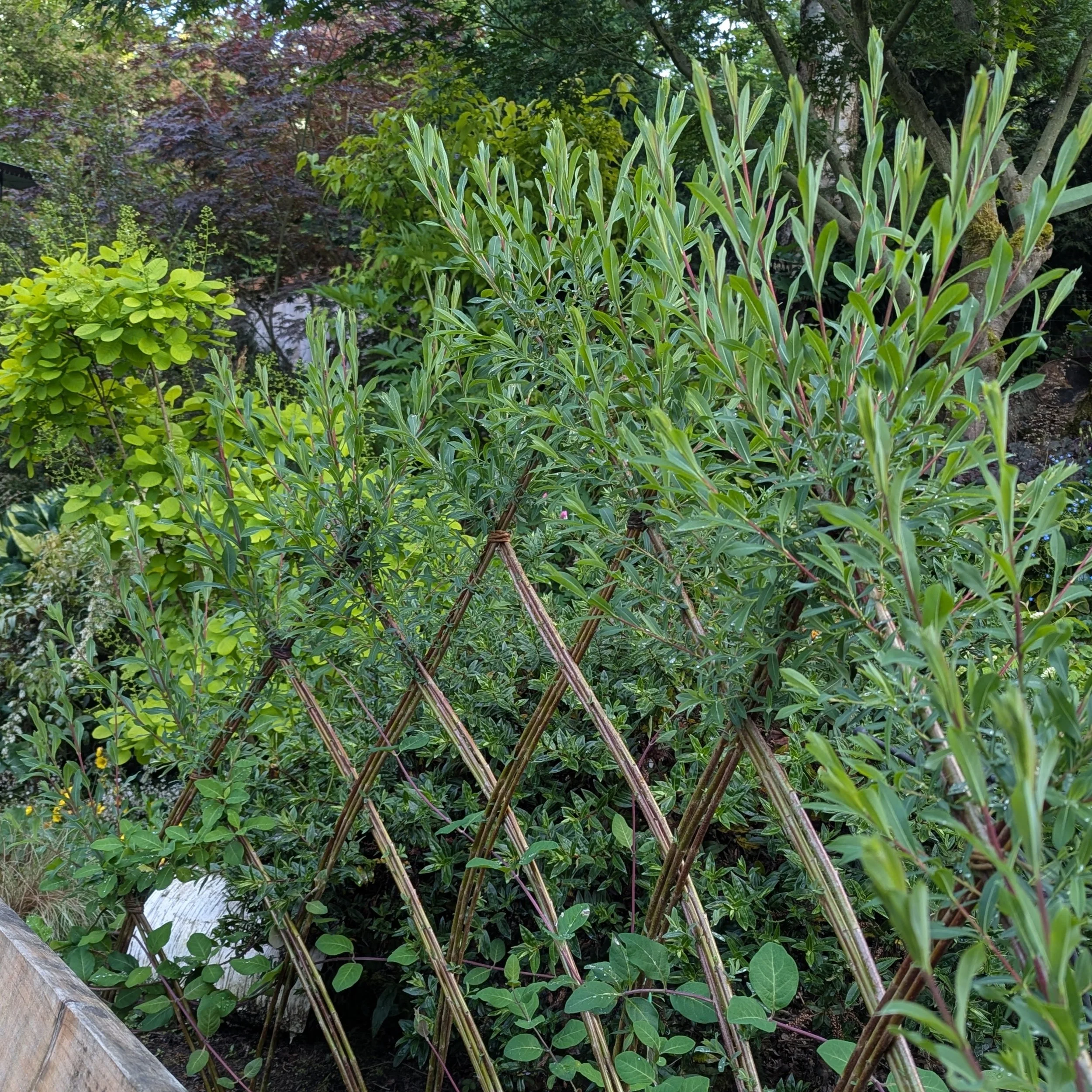
With a supply of much more refined basketry willow available after our second year harvest, Erin decided to scrap the structures built in 2024 and start afresh. Currently seen in the garden are a living braided harlequin, a new obelisk, and a single arching fence panel behind a seating area (pictured below).
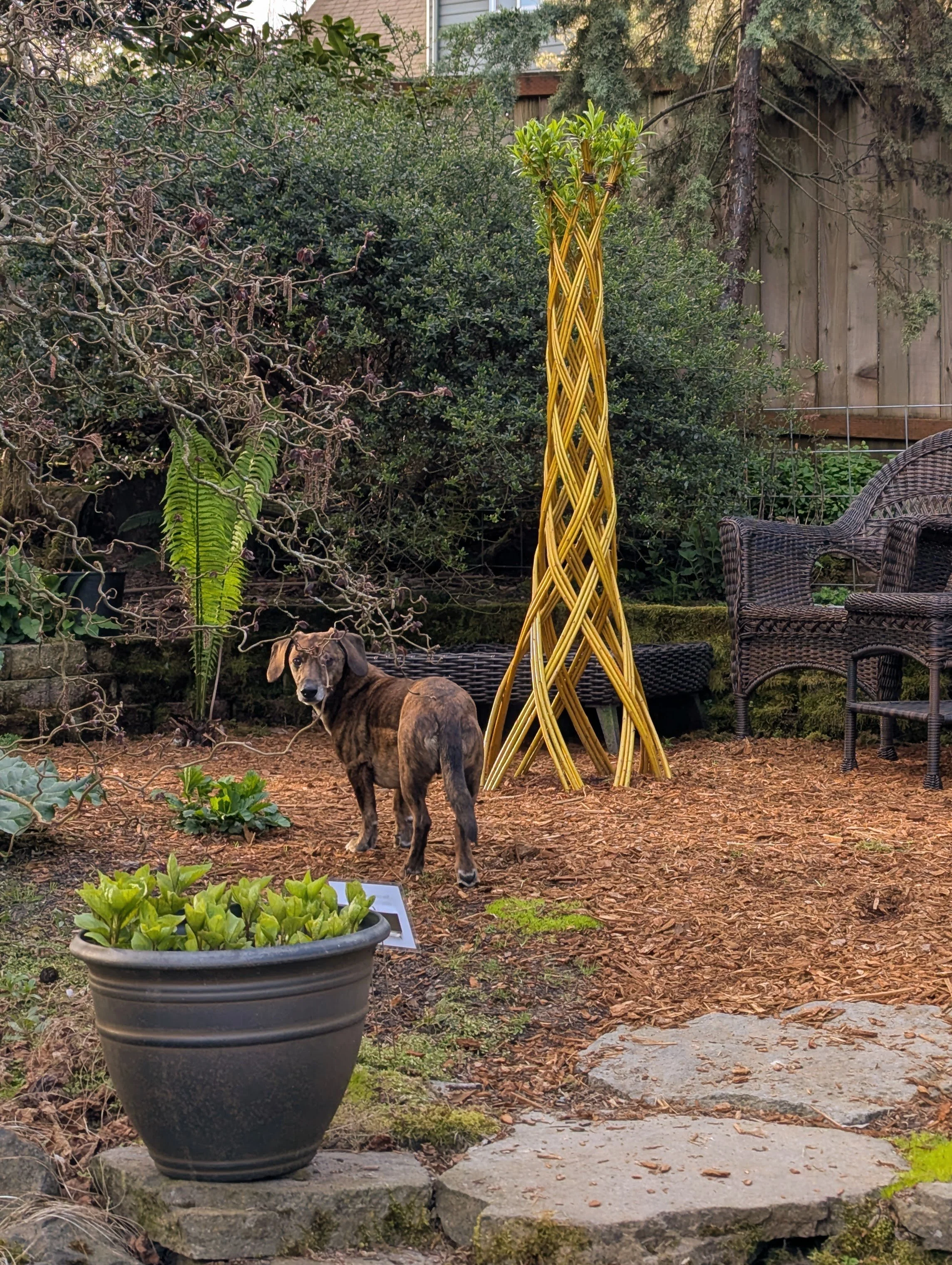
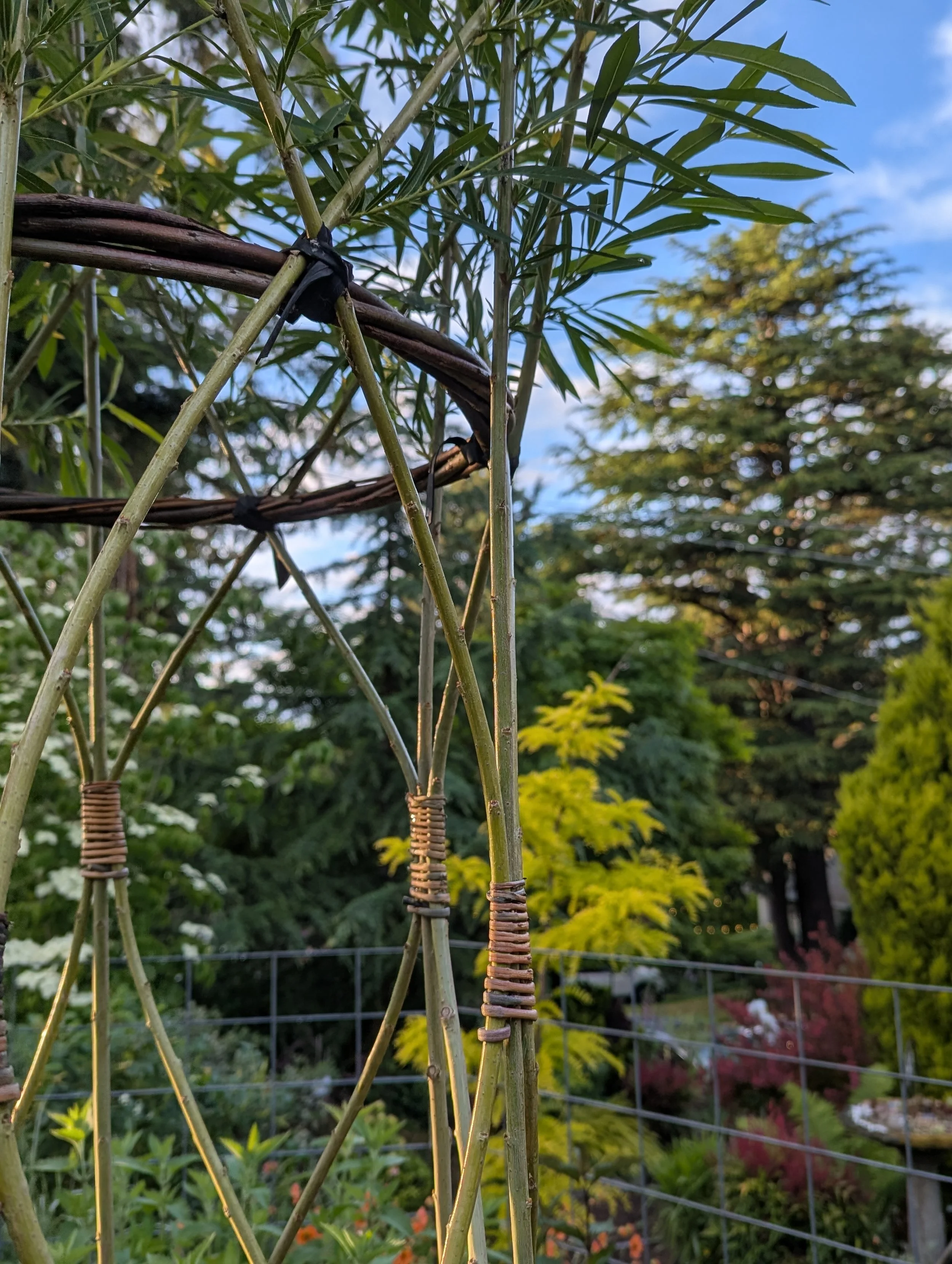
Living willow harlequin
Braided willow harlequins can be built on a small scale in a pot, and Erin actually teaches this occasionally as a workshop (only available in early spring). After creating several in a pot in 2025, she wanted to make a BIG one planted directly into the garden. For years, we have had natural stone steps in the center of our garden, leading to a landing where I imagined building a stone patio. But, that project has long been put off, and the area has mostly sat empty. I realized it was the perfect spot for a harlequin, and Erin built one in March 2026.
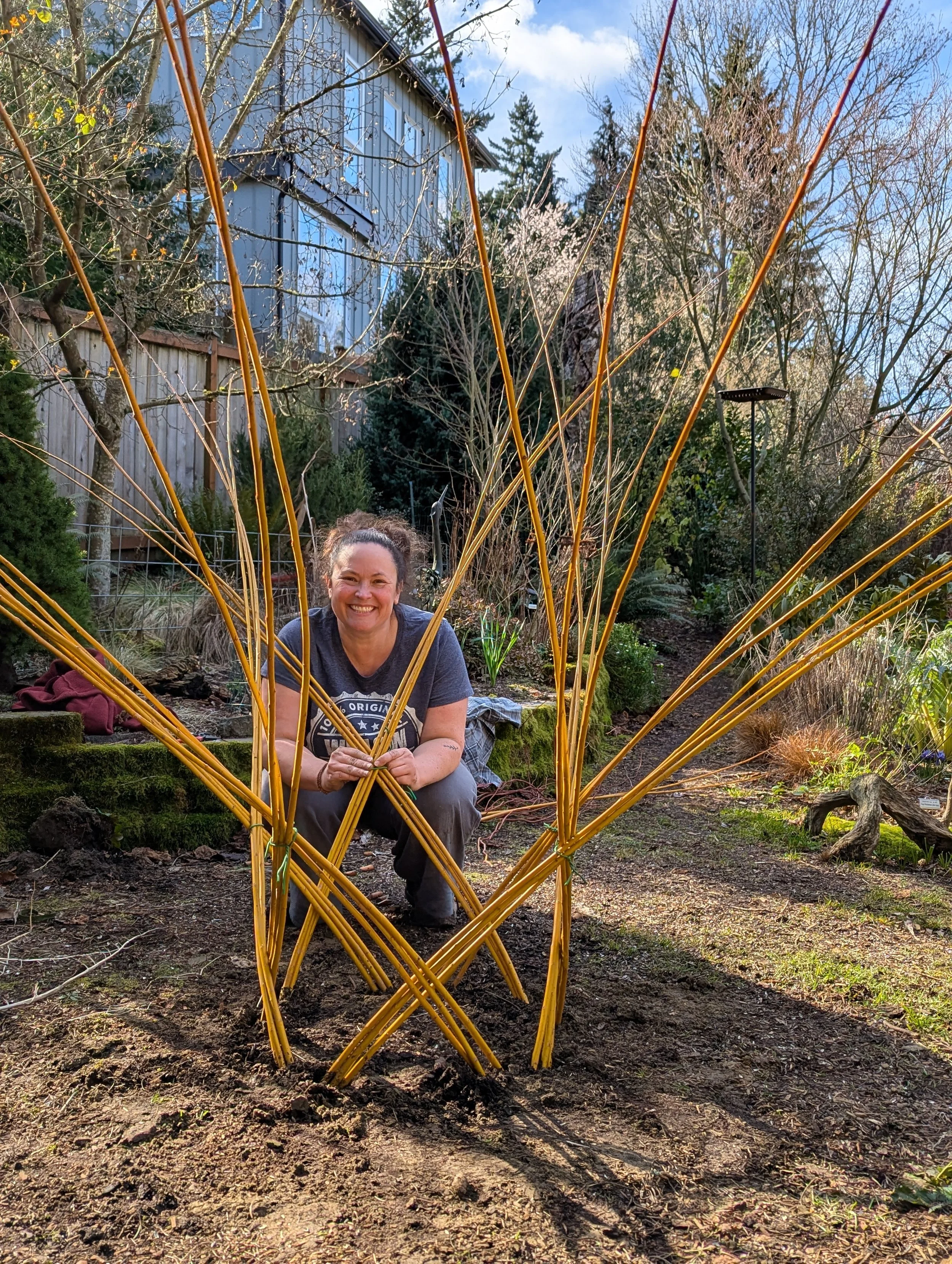
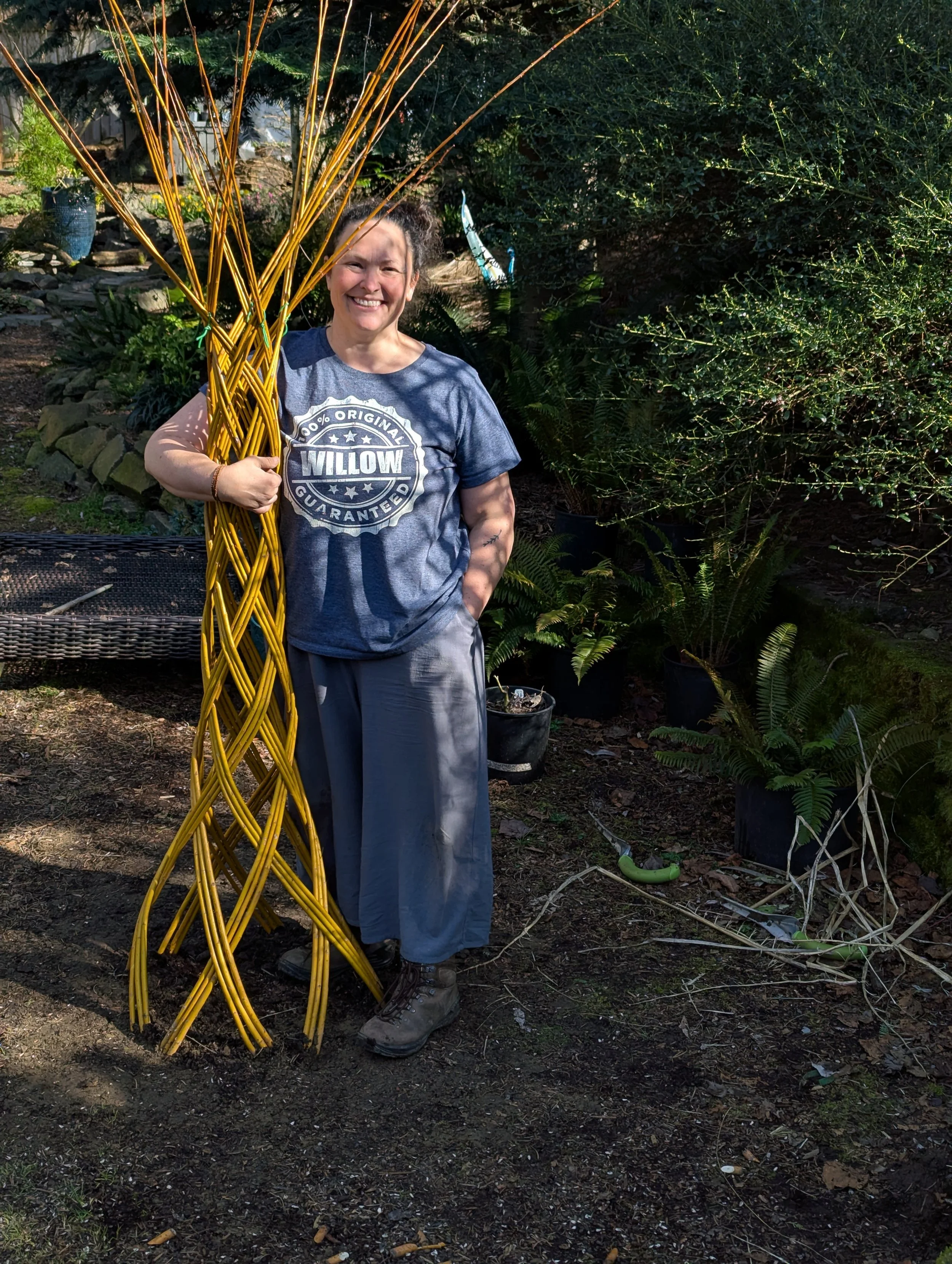
The bright gold color comes from the variety of willow used, a basketry species called salix fragilis f. vitellina ‘Jaune de Falaise’. Many willows have colorful first year stems; the incredible gold color here will fade as the stems mature.
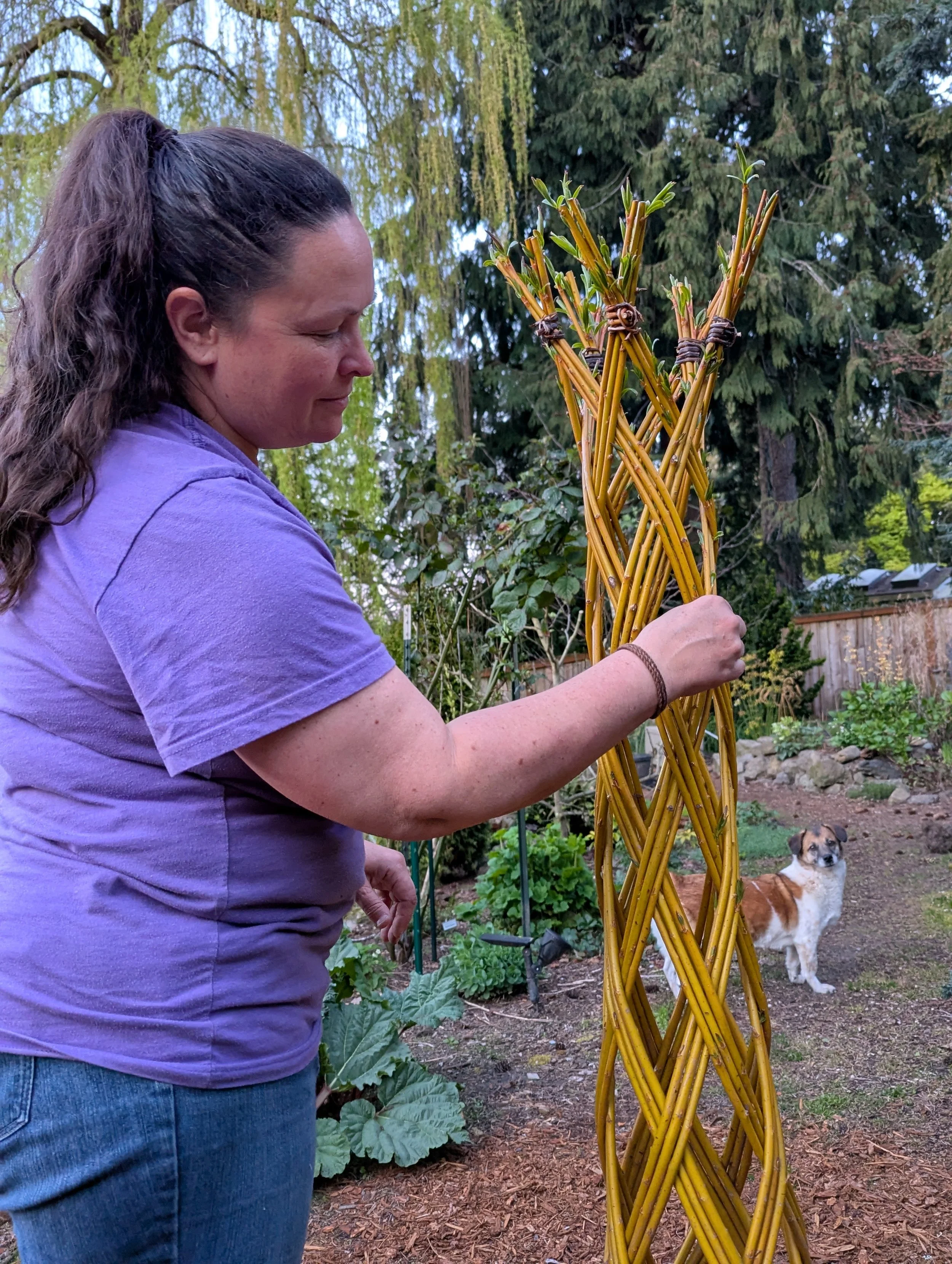
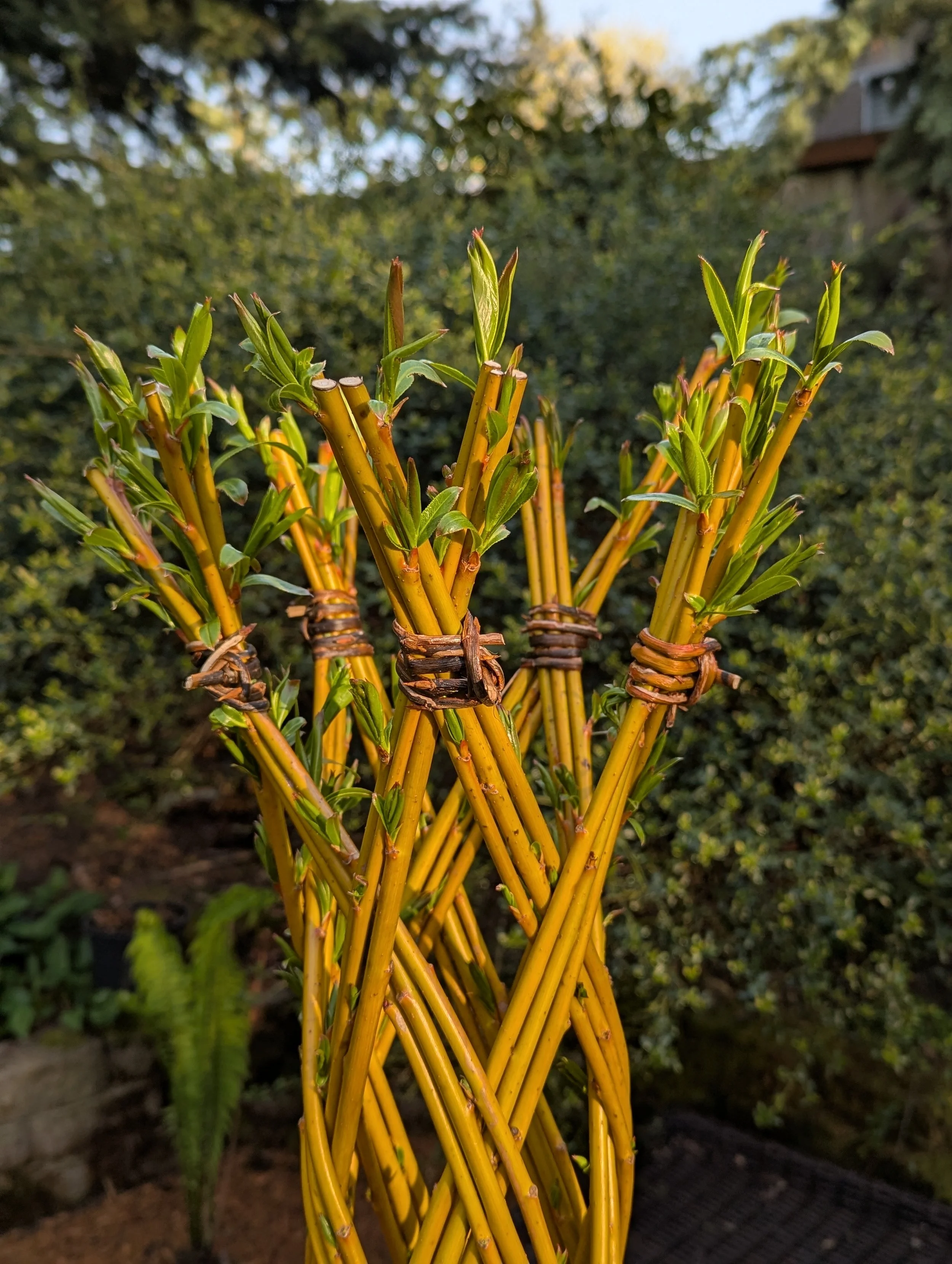
By nipping out all the leaves and stems on the lower portion of the harlequin (if you keep up with it you can simply use a fingernail), Erin will force all of the growth to be at the top. These will form new stems, and she’ll have to decide how much to prune the growth and what shape to give it (or just let it be natural).
At the end of the year, the leaves will fall off, revealing the bright gold color of the first year stems. In March each year, the previous season’s growth will get cut back down to the original height of the harlequin, and it will all regrow (though with more and more stems each season). Here’s what it looks like in May of 2026:
Harlequin filling in, May of 2026 (the blue flowering shrub behind is a ceanothus)
Living willow fence panel
Willow fences have a long history in Europe, where willow has been used traditionally for ages, especially in the UK where lumber is in short supply. Imagine having a fence that gets bigger and stronger each year!
The fence panel Erin built for us is just for looks. It sits behind a bench in a lovely spot in the garden.
The fence is made with a basketry willow called salix purpurea ‘Dark Dicks’. Though it is only about 42 inches high, you have to start with much taller stems to create these curves (and also have some in the ground, obviously). I think these stems were initially nine feet tall. Here is the fence in March and then in May:
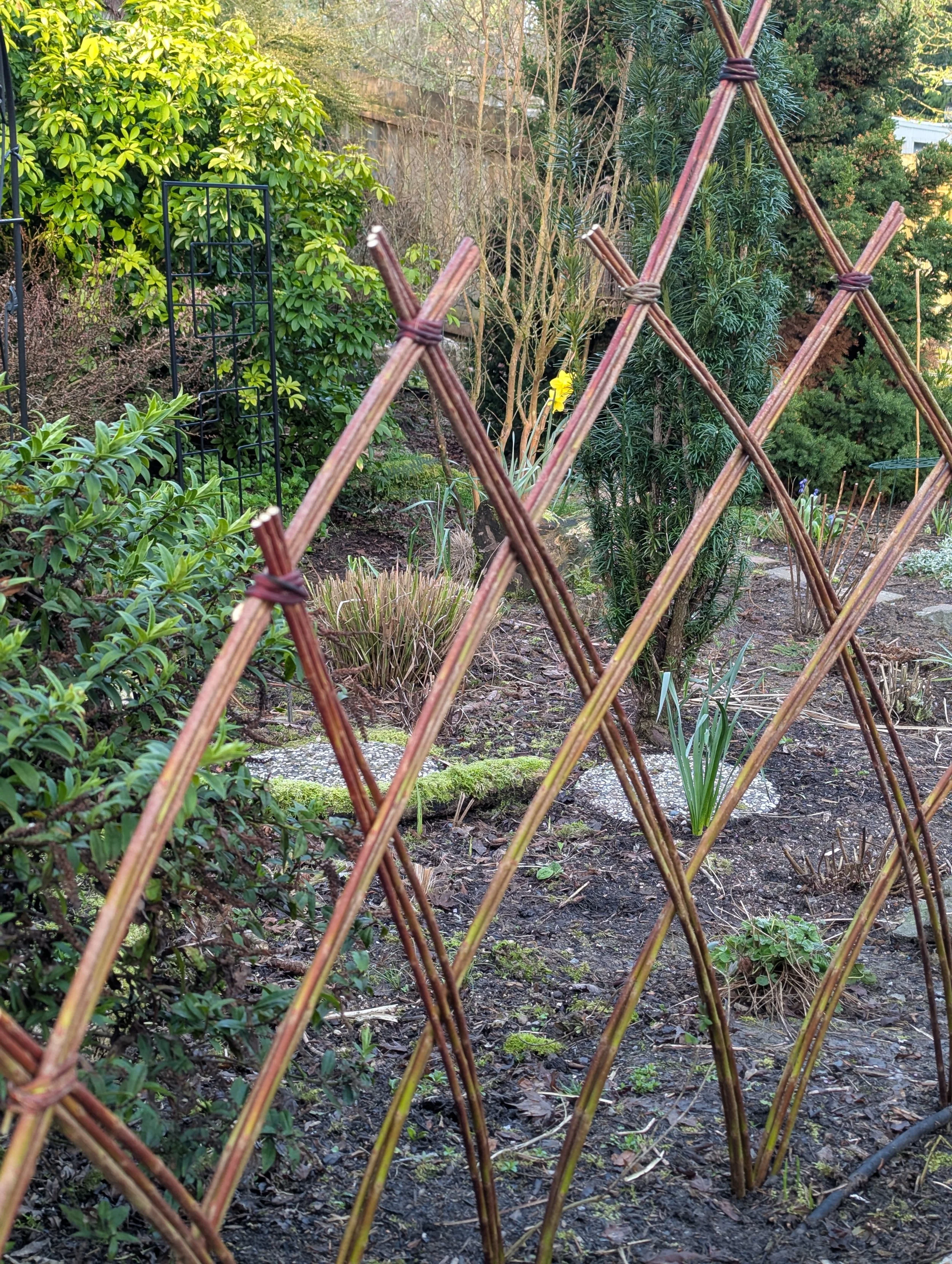
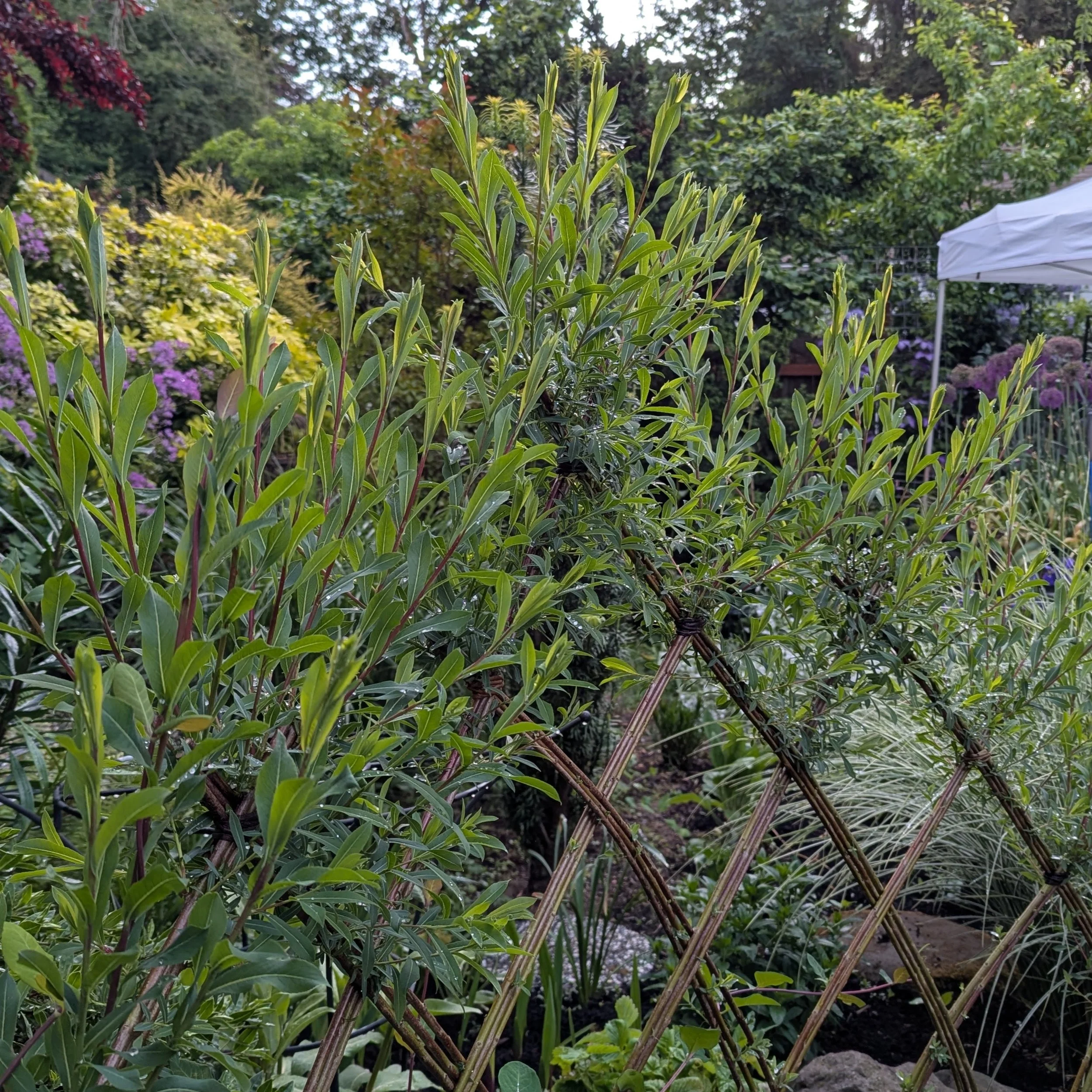
The stems at the top will grow something like 4 to 8 feet in height each year, which means there are lots of options for how to prune it and how tall to let it be. As with the harlequin, late each winter the new growth will all get cut off to start the process over.
Living willow obelisk
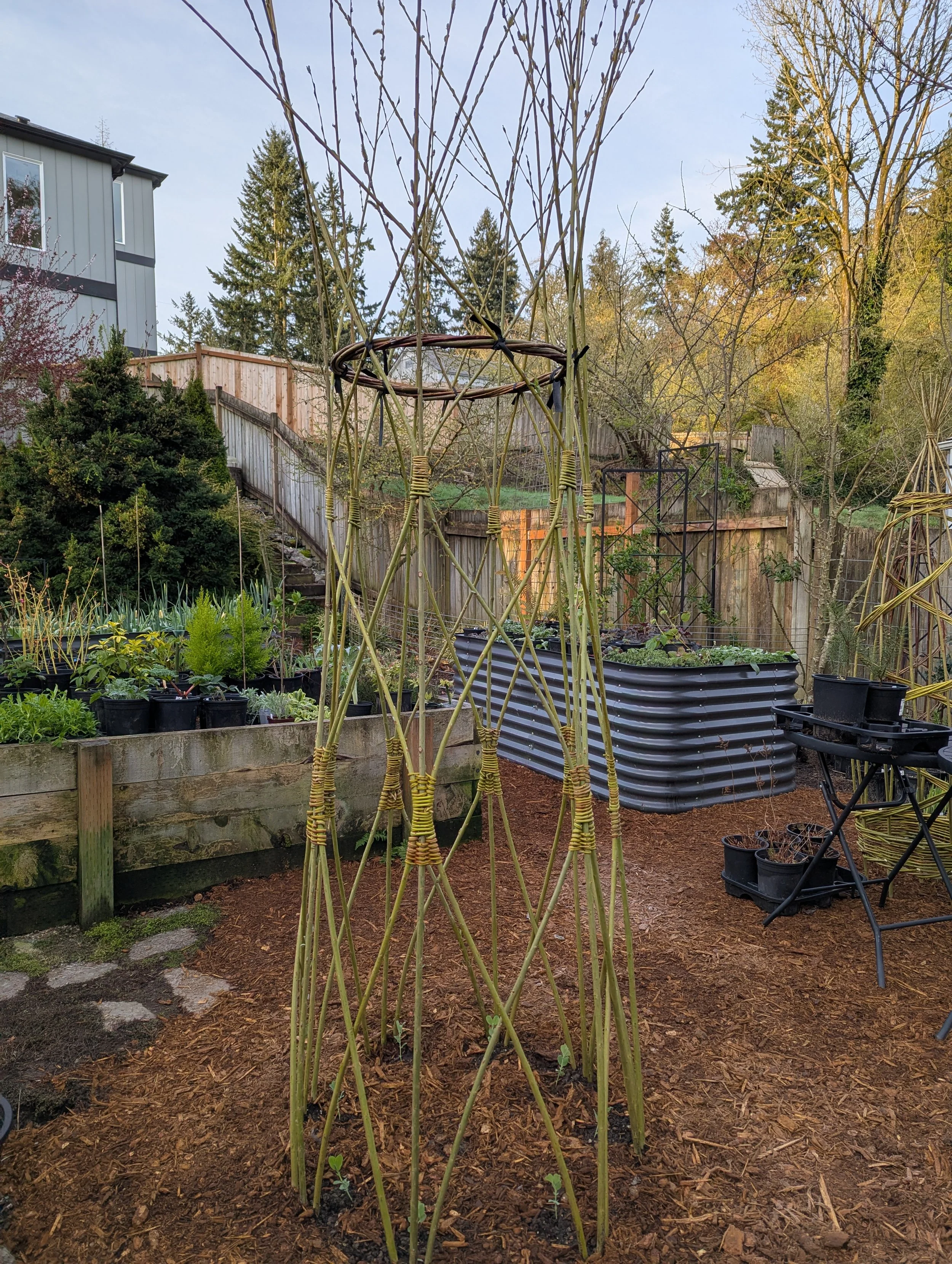
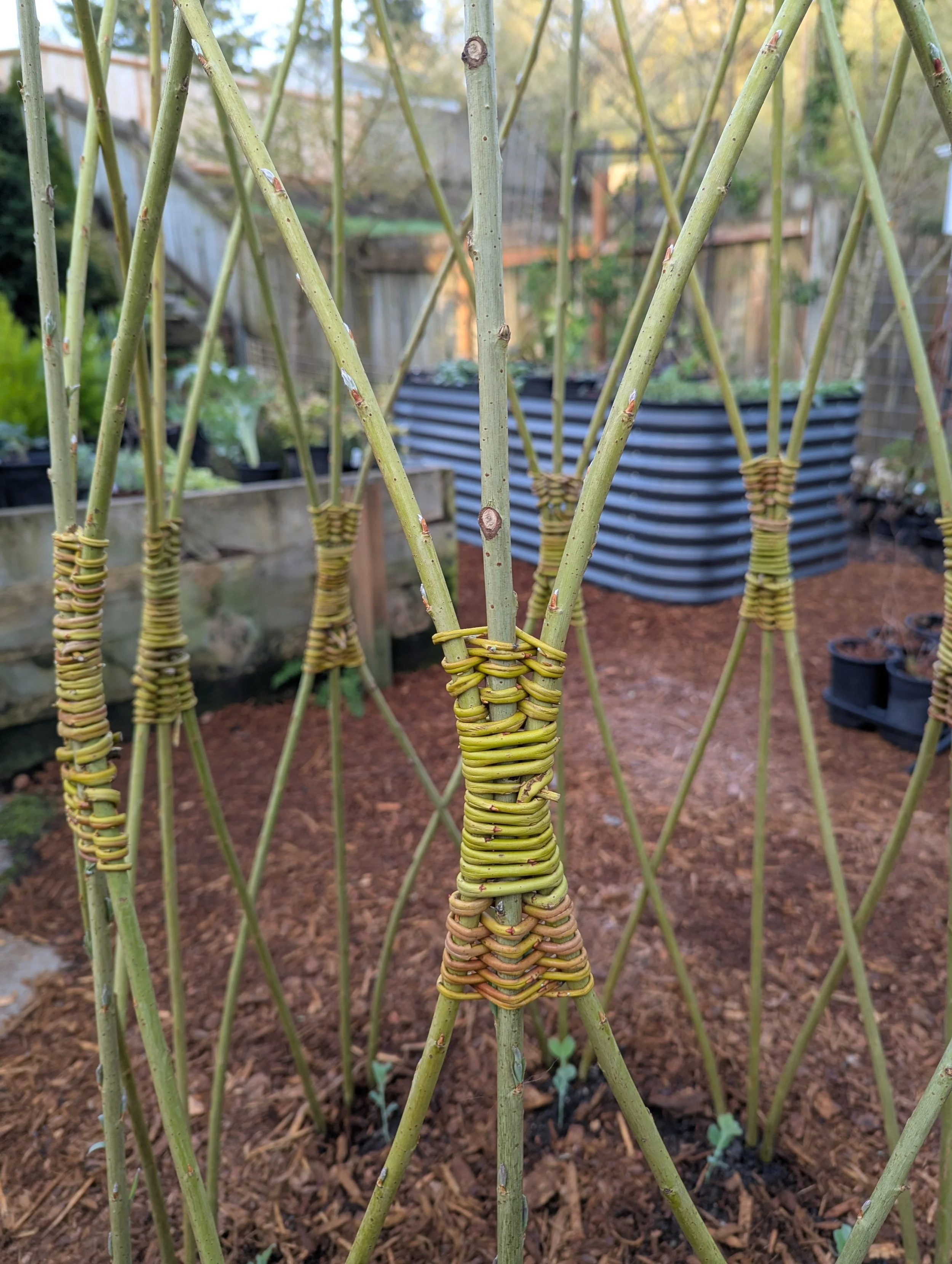
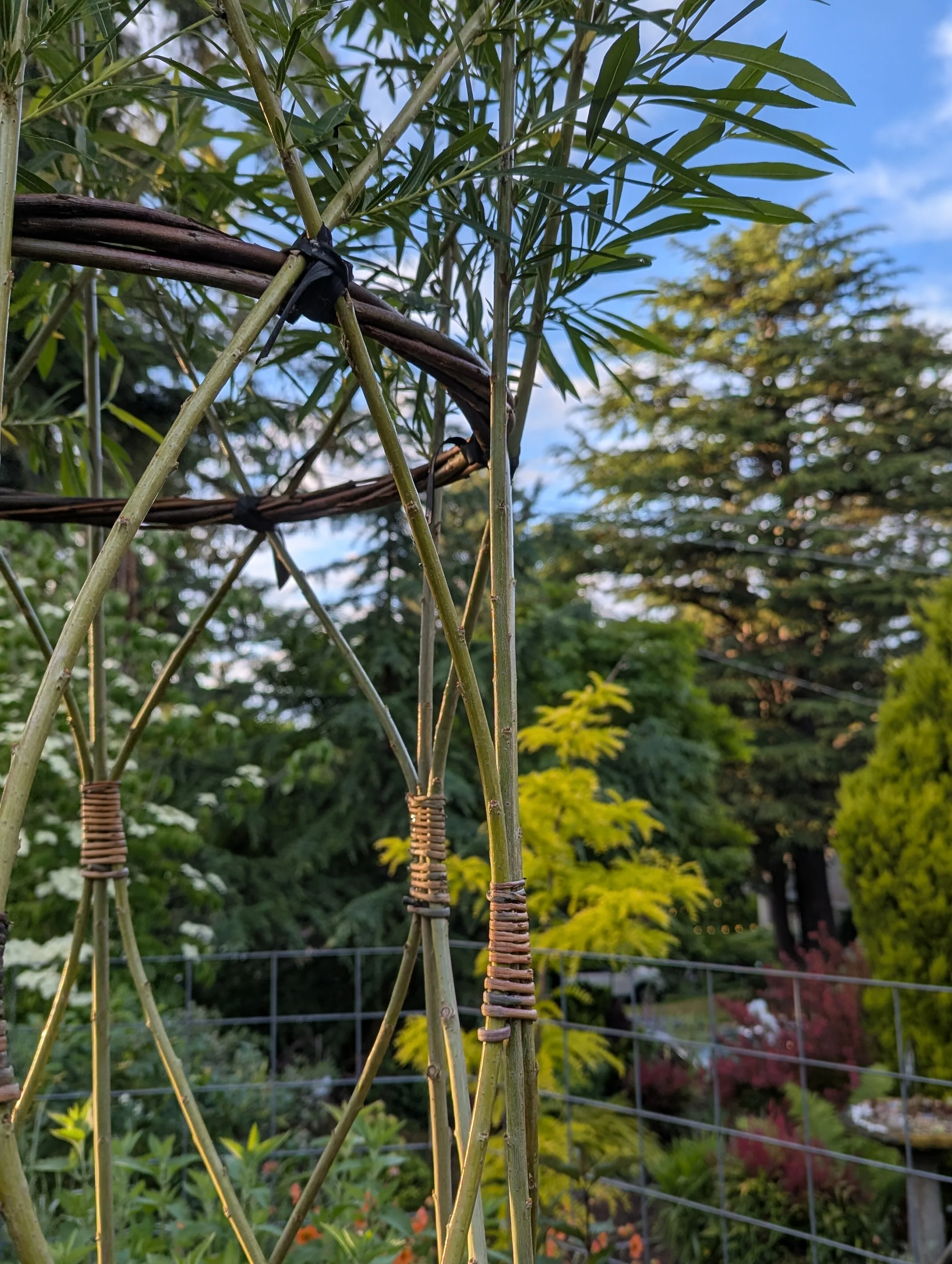
An obelisk is not only a neat structure in and of itself, but it can serve as a trellis, too. I’m growing sweet peas on this one in 2026.
This obelisk is made with a basketry cultivar called salix purpurea ‘Dicky Meadows’ (if you’re snickering at all the ‘dick’ references, it may help you to know that ‘dick’ translates roughly as ‘stick’ in old English 😆). This sucker is 8 feet tall, even before it has started putting on new growth! Erin thinks she will weave the top growth to a point as it grows, but we’ll see what happens—part of the fun of living willow is deciding how to train the new growth.
It won’t take long for the obelisk to start to feel like a tree.
Future living willow dreams
Each year, our little willow farm patch (which now has about 1500 willow shrubs growing on it!) will produce more and more stems, and the potential for building larger living structures may present itself. Erin dreams of building a tunnel or a decent sized play hut, though she will also be able to build small projects for other folks like the ones we are enjoying in the garden this year.
If you have any interest in talking with Erin about an installation on your property, please visit her Living Willow Structures page.